.svg)


Composable or Monolithic: What a Live Debate Between Pentaleap and Criteo Revealed About Retail Media's Next Phase

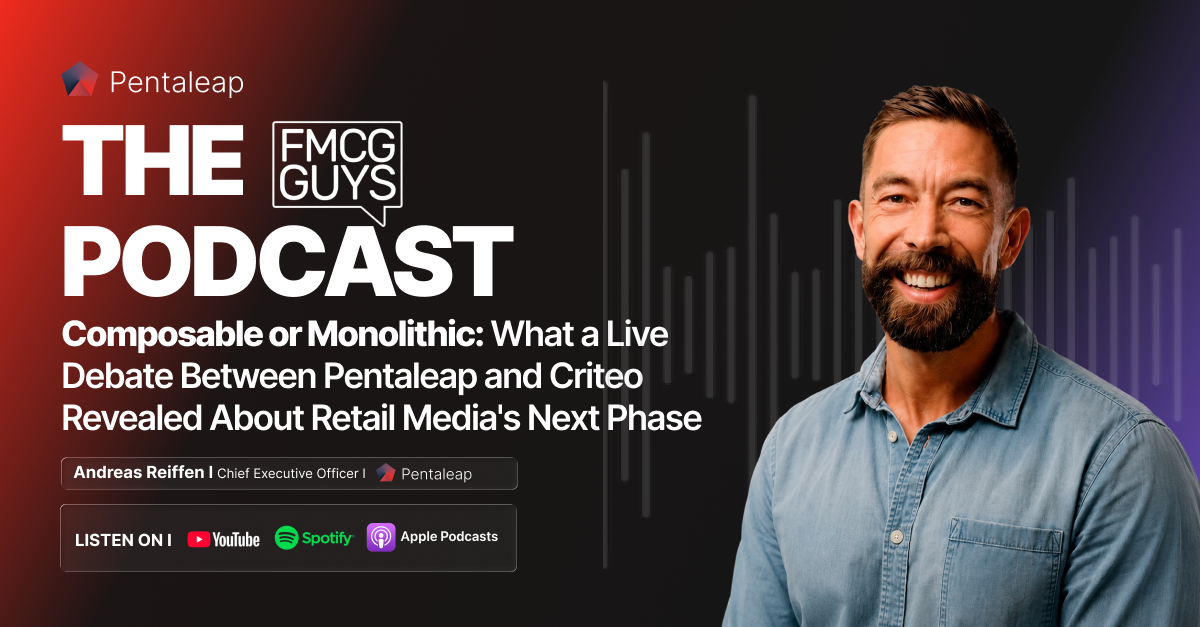
Notes from The FMCG Guys podcast, with host Daniel Torres
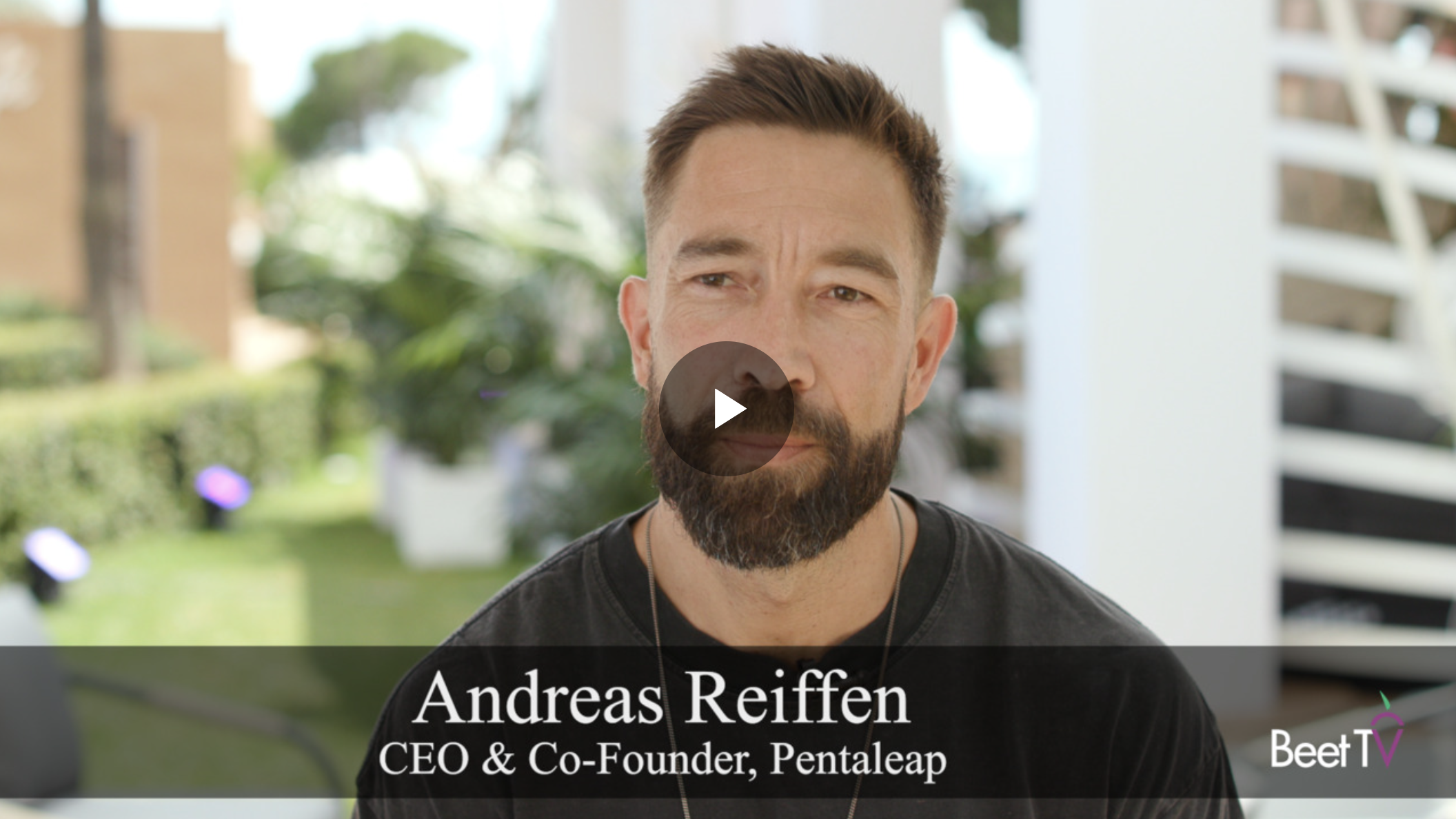
On this episode of The FMCG Guys, host Daniel Torres brought together two people usually associated with opposite camps of a public LinkedIn debate: Andreas Reiffen, Founder and CEO of Pentaleap, and Melanie Zimmermann, General Manager of Retail Media at Criteo. The conversation followed weeks of industry back-and-forth, sparked by an Adweek article questioning whether Criteo's market position was shifting as newer, more specialized companies like Pentaleap gained ground. Rather than avoid the tension, Torres asked both guests to address it directly: is retail media moving toward composable, best-in-breed tech stacks, or will a single incumbent vendor handling every layer continue to lead? What followed was less a debate and more a shared diagnosis of where the category actually stands.
TL;DR: Reiffen and Zimmermann agree on more than the LinkedIn commentary suggested. Both see fragmentation, not competition between vendors, as retail media's core unsolved problem. Zimmermann pushed back on the idea that Criteo only recently became composable, pointing to years of demand-side partnerships and a deliberate move toward modularity. Reiffen argued that real-time bidding (RTB) is now lowering the cost of connecting outside demand, which levels the playing field between incumbents and newer, specialized providers. Where they landed together: retail media's future isn't about which company owns the whole stack, it's about how well each component, ad serving, front end, and demand connections, performs on its own merits. Watch the full episode on YouTube.
The Myth That a Front End Alone Solves Growth
Asked to name a myth worth retiring, Zimmermann pointed to something she sees retailers chasing right now: building a polished, retailer-owned front end and assuming brand investment will follow. In practice, she's found that large brands and agencies operating across many retailers are less interested in one more proprietary interface to learn and more interested in simplicity, especially when they're already managing spend across a dozen or more networks. A front end is one piece of a retailer's strategy, not the growth lever on its own.
Reiffen agreed and extended the point to fragmentation more broadly. A few years ago, retail media was widely treated as an easy new revenue line. What's become clear since is that turning existing shopper marketing and trade dollars into "retail media" is straightforward. Attracting genuinely new, incremental media budget is a different and much harder problem, one that requires solving fragmentation, not just building a better interface.
Retail Media's Honeymoon Phase Is Over
Zimmermann described a shift she's watching closely: brands compared their retail media spend enthusiastically to their overall marketing budgets in the early years, driven by new targeting capability and better transparency than they'd had before. Now that comparison cuts the other way. When ad spend inside a retail media network doesn't grow at the same pace as sales with that retailer, brands start describing the relationship as a cost of doing business rather than a media investment worth expanding.
Reiffen's framing was blunter: trade and shopper marketing dollars have always functioned as a cost of doing business with a retailer. The real unlock isn't relabeling that spend, it's solving the fragmentation problem well enough that brands actually see a return on incremental dollars, which is what justifies spending more.
Four Problems Underneath One Big Problem
Asked what frustration comes up most often in conversations with retailers, Reiffen resisted picking just one, instead breaking the overall challenge, how to scale a retail media business, into four connected pieces. First, serving ads relevant enough that they don't damage the site experience retailers depend on to sell product in the first place. Second, addressing fragmentation, both across the dozens of separate retail media networks a brand has to navigate, and inside a retailer's own walled garden, where sponsored products, display, and other formats are often sold and managed separately. Third, making it easy for brands to deploy budget across every channel where they're already active, whether that's on-site, Meta, or Google. Fourth, and increasingly urgent, keeping the cost of the underlying technology in check, since that cost flows straight through to a retailer's margin in a category where competing against Amazon's scale leaves little room to spare.
Zimmermann added a related organizational dimension: as ad density increases, retailers face mounting internal pressure to keep growing both their merchandising business and their advertising revenue at the same time. That pressure is pushing retailers to rethink incentive structures so merchandising and advertising teams work toward shared goals, and to seek out tools that let organic and paid ranking logic operate as one system instead of two.
How Retail Media Tech Actually Got Here
Reiffen walked through the history that explains today's shift. In the earlier era, buying ad serving technology from an incumbent also meant buying access to the demand that came bundled with it, largely because building direct API connections into large managed-service platforms was too costly for smaller providers to justify. That structure gave the market leader a durable advantage independent of how good the underlying technology was.
Two things have changed that. Many retailers have since built in-house sales teams, reducing the value of a vendor's built-in sales force. And a newer technology, RTB specifically adapted for endemic retail media (distinct from broader programmatic RTB), now makes it far cheaper to connect demand from major ad tech platforms like Google, Trade Desk, or Microsoft. Because that connection is inexpensive to build and maintain, more companies, not just the largest incumbents, can offer it, which is what Reiffen described as leveling the playing field. Retailers can choose technology on its own merits, without worrying that switching providers means losing access to the demand flowing through it.
The Incumbent's Perspective: This Flexibility Isn't New
Zimmermann offered a clear counterpoint. Criteo, she noted, has spent years building more than ten demand-side partnerships at scale, work she described as genuinely difficult to replicate given the technical lift required on both sides of each integration. She also pushed back on the idea that composability is a recent development for Criteo specifically, pointing to a more flexible approach the company formalized with an expanded set of front-end and partnership options, giving retailers the choice to use Criteo's own interface, build their own, or integrate through partners like Vantage, Placements.io, or Salesforce.
Her caution for the broader market: connectivity alone isn't the finish line. An RTB connection is only as valuable as the underlying ad server's depth of features and use cases. She also flagged a real operational risk in assembling too many point solutions at once, only half-jokingly calling the result a "Frankenstack," and argued that the industry's task now is enabling genuine use cases and value for brands and retailers, not simply racing to announce new connections.
Where Home Depot Shows What Composable Actually Looks Like
Both guests pointed to the same real-world example of a best-in-breed stack working in practice. Home Depot selected Pentaleap for sponsored product ad serving, a separate provider for display, and Vantage for front-end orchestration across channels including Meta, Pinterest, Google Ads, and digital out-of-home. Reiffen was candid that this isn't the simplest setup to stand up initially, but once assembled, it lets a retailer choose genuinely the best tool for each layer rather than accepting whichever capability came bundled with a single vendor's stack.
Reiffen described the core distinction as ad serving, deciding which products show and where, versus the front end, where budgets are set and campaigns are steered. Splitting those two functions apart, he argued, is what makes it possible to have deep, specialized capability in each without forcing every retailer into an identical, one-size-fits-all product.
Why Ad Serving Is the Piece That Actually Touches the Shopping Experience
Reiffen brought the conversation back to fundamentals: ad serving is the decision, made constantly, of whether to show a normal search result or a sponsored one in its place. Get that decision wrong, and a retailer doesn't just lose a click, it takes prime inventory away from a product that might have actually sold. That's the specific problem Pentaleap set out to solve first, before expanding into adjacent formats like video or display.
The Next Challenge: Protecting Organic Integrity as AI Reshapes Search
Looking further out, Zimmermann raised a tension she expects to intensify as agentic and AI-driven shopping experiences become more common: balancing the integrity of product recommendations shown to a customer against a brand's need to see incremental results from its ad spend. If ranking logic leans too far toward simply reinforcing what already performs well organically, large brands may start questioning why they should pay for placement they'd have earned anyway, while smaller brands ranked lower organically lose any real path to visibility. Neither outcome is healthy for the ecosystem. Her view is that solving this requires an auction and ranking model sophisticated enough to weigh relevance, bid value, and organic alignment together, not treat them as separate systems bolted side by side.
Reiffen connected this directly to retail media's long-standing measurement problem, one that surveys from firms like McKinsey and BCG consistently rank as the industry's top concern. He pointed to unified ranking as a genuine opportunity here: because a unified system can calculate the traffic lift a sponsored product receives relative to where it would have ranked organically, it creates a path toward real transparency, something today's parallel, disconnected systems make difficult to measure at all.
Two Predictions for the Year Ahead
Asked where the industry lands a year from now, Zimmermann expects larger brands and agencies to consolidate spend into fewer, more holistic platforms and to keep shifting from fixed-price buying toward auction-based models, continuing a move Criteo has already seen strong adoption around in display specifically.
Reiffen's prediction centered on the effects of a more level playing field: more even market share distribution across providers, lower prices as retailers gain negotiating leverage, and a shift where programmatic, network-sourced demand grows faster than direct private-market sales, gradually easing the fragmentation both guests agreed is retail media's most persistent structural problem.
FAQ
Is Criteo losing market share to newer, specialized retail media companies like Pentaleap? The conversation didn't frame it as a share battle. Both guests agreed the real shift is structural: retailers increasingly have the option to choose best-in-breed components, like ad serving, front end, and demand connections, from different providers, rather than being limited to a single, all-in-one incumbent stack.
What is retail media RTB, and how is it different from programmatic RTB? Retail media RTB is real-time bidding adapted specifically for endemic, on-site sponsored products, distinct from the broader programmatic RTB used across the open web. It lets retailers connect demand from platforms like Google, Trade Desk, or Microsoft at a much lower build and maintenance cost than traditional API integrations, which historically only the largest incumbents could afford to sustain.
Do retailers need one platform that does everything, or can they combine multiple vendors? Both guests pointed to composable, best-in-breed stacks as a working model in practice, citing Home Depot's combination of Pentaleap for sponsored product ad serving, Kevel for display, and Vantage for front-end orchestration. The tradeoff is more setup complexity upfront in exchange for deeper capability in each layer.
What's the biggest unsolved problem in retail media right now? Measurement. Surveys from firms like McKinsey and BCG consistently rank it as the industry's top concern. Unified ranking offers one promising path forward, since it can calculate the traffic lift a sponsored product receives relative to where it would have ranked organically, creating a clearer basis for transparency than today's disconnected systems allow.
This post is based on a conversation between Daniel Torres of The FMCG Guys, Melanie Zimmermann of Criteo, and Andreas Reiffen of Pentaleap. Watch the full episode on YouTube.
Stay Ahead with Retail Radar
Subscribe for cutting-edge insight into the latest retail media developments and trends
.png)

.webp)