.svg)


From the Croisette: Pentaleap's Andreas Reiffen on Cutting Through the AI Noise in Retail Media

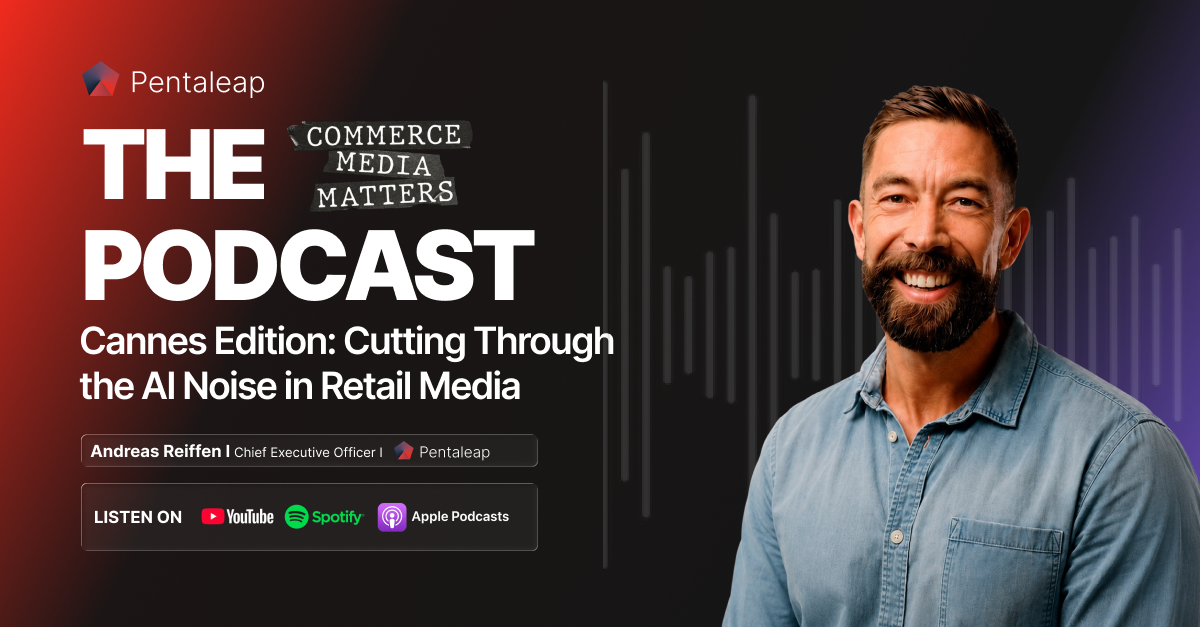
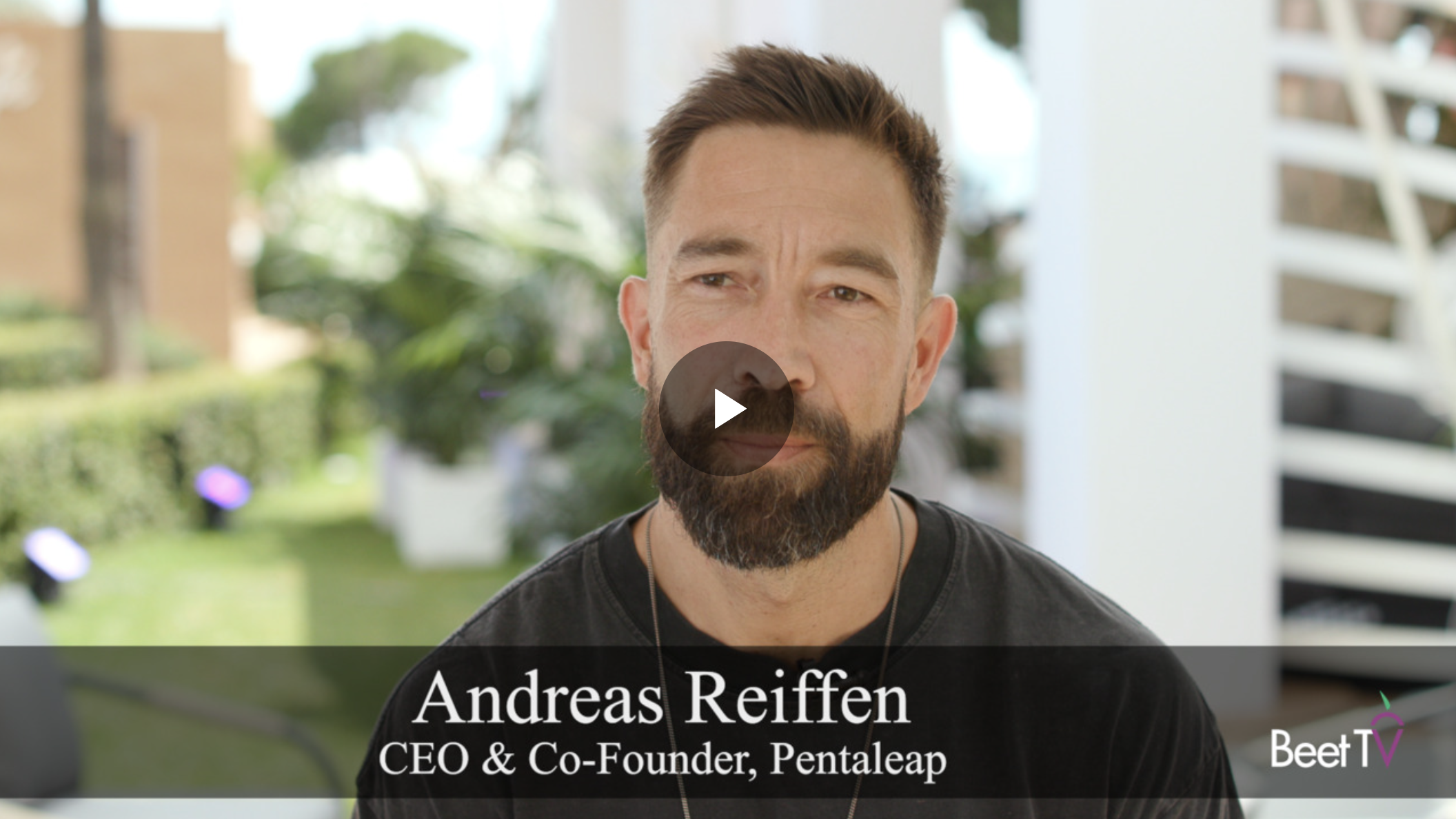
Andreas Reiffen, Founder and CEO of Pentaleap, joined hosts Nick Morgan and Paul Blackburn in a moving podcast van at Cannes Lions 2026 for Commerce Media Matters: Cannes Lions Edition. The unscripted, on the ground conversation covered how buyers can cut through AI marketing noise, why the retail media stack is splitting into modular pieces, and what MCP could mean for how brands reach on site inventory. Listen to the full episode on Spotify.
TL;DR: At Cannes Lions 2026, Andreas Reiffen used his time in the Commerce Media Matters podcast van to make a case for buyer education over vendor hype. His argument: most companies pitching AI in retail media are describing the same handful of underlying capabilities, and what actually matters is not who built the intelligence but what is operating under the hood. He also unpacked the shift from single vendor, all in one retail media platforms toward modular stacks, detailed Pentaleap's new partnership with Xicha, and shared an early, unresolved question about what MCP and agentic commerce mean for how brands will reach retail inventory.
Key Takeaways
- Buyers are confused because everyone sounds the same. In a market of roughly 10 to 12 companies that matter in on site retail media, Reiffen said whether or not a vendor actually has AI, they are all pitching similar language, making it hard for buyers to separate real capability from marketing narrative.
- There are two legitimate approaches to AI in on site retail media. A company can build its own AI to power search, personalization, and ad ranking, or it can plug into the AI that search and personalization vendors have already built and that retailers are already running. Reiffen argued the second path avoids paying twice for largely redundant intelligence.
- What matters is what operates under the hood, not who built it. When buyers ask what AI Pentaleap has built, Reiffen's answer is that the source of the intelligence matters less than the fact that one brain governs paid and organic ranking together.
- The retail media market is splitting into bundled and modular camps. Legacy platforms bundled ad serving, demand, and campaign UI into one company with a strong lock in. Newer entrants are unbundling those pieces, and Reiffen expects both models to coexist as the market matures.
- Pentaleap positions itself as a control layer, not a front end. Rather than competing with orchestration platforms like Xicha or demand sources like Amazon, Pentaleap sits underneath them, giving retailers one system that governs the grid while they choose freely who supplies demand or manages campaigns.
- The Xicha partnership extends unified ranking to display and video. Xicha pushes sponsored products to Pentaleap, which renders the full grid, sponsored, organic, and now banner and video formats, under one ranking logic designed to maximize margin across both the ad and ecommerce business.
- MCP raises an open question about the future supply path. Reiffen is excited about natural language control of ad serving in the near term, but flagged a bigger unresolved question: once brands can reach on site inventory through multiple paths (orchestration platforms, demand partners, or MCP directly), what does the supply chain into retail media inventory actually look like.
- Chatbots are unlikely to become a major shopping destination. Reiffen expects AI chatbot traffic to remain a small channel for retail, since decisions may get made inside a chatbot but the actual browsing, comparing, and buying experience still favors a retailer's own site or something as visually driven as TikTok.
Cutting Through the AI Marketing Noise
Reiffen was candid about a problem he sees across the retail media and commerce media space: too much noise, not enough signal. With only 10 to 12 companies that genuinely matter in his corner of the market, he said buyers are overwhelmed because every vendor, regardless of whether they actually have meaningful AI, is pitching some version of the same story.
His response has been to break an unwritten industry rule and talk openly about competitors, taking what he described as a top down view of who actually does what and how the approaches compare. The goal, he said, is helping buyers make informed decisions rather than letting marketing language stand in for substance.
Build It or Plug Into It
Reiffen laid out two real approaches to AI in on site retail media. A vendor can build proprietary AI to power how organic and sponsored results are ranked and assembled into a page. Or a vendor can plug into the search and personalization AI that retailers are already running, avoiding duplicate investment in intelligence that already exists.
Pentaleap takes the second path. Reiffen argued there is a lot of redundancy in companies that build AI which largely replicates what a retailer's existing search and personalization stack already does, calling it an inefficient use of resources to pay twice for the same underlying capability, often with worse results. His philosophy for on site retail media stays consistent with what he has said elsewhere: there should be one brain deciding paid and organic ranking together, regardless of which company built the intelligence behind it.
Bundled Versus Modular: A Market in Transition
Reiffen described the retail media stack's evolution in two phases. Early on, the market was dominated by a single company bundling ad serving, demand generation, and campaign UI into one product, giving retailers relatively little control over their own digital shelf and creating strong vendor lock in.
Now, he said, the market is seeing a wave of startups take a more modular approach, unbundling those pieces. He was careful not to declare one model the winner. All in one platforms, which he pointed to companies like Cody, Kevel, TopSort, and Osmos pursuing, offer convenience: one contract, one company, fewer tools to stitch together, at the cost of betting that a single vendor can keep pace with every part of a fast moving market. Modular approaches offer flexibility and best of breed performance, at the cost of added complexity if not managed well.
Pentaleap's own position is deliberately narrow. Rather than compete with front end orchestration platforms, Reiffen said Pentaleap provides only a control layer for on site inventory, letting a retailer apply its own business logic while plugging in whichever campaign UI or demand source it chooses, whether that is Xicha, Osmos, Amazon, or a partner like Teads. He compared the model to how Google, Meta, and TikTok never cede control of how ads render alongside their own results, arguing retailers deserve that same control while still having freedom to choose demand partners.
The Xicha Partnership
Reiffen detailed a new partnership with Xicha built on a shared philosophy. Pentaleap's unified ranking approach does not slot ads into fixed, predefined tiles. Instead, one system ranks sponsored and organic listings together, now extending to banners, display, and video, in a way designed to drive margin across both advertising and ecommerce.
Under the partnership, Xicha pushes sponsored products to Pentaleap, which renders the entire grid and ranks those products alongside organic results. Reiffen framed it as a natural extension of a model he has described before: as more ad formats and demand sources get added, they all need to run through the same underlying ranking logic rather than being layered on as separate, siloed systems.
What MCP Could Mean for the Supply Path
Asked about MCP and its near term impact, Reiffen split his answer into the practical and the unresolved. In the near term, he is excited about using natural language to control ad serving directly, describing a workflow where a request like increasing sponsored product count from three to seven could go live within seconds, without logging into a dashboard.
The bigger, open question he raised is what MCP does to the broader supply path. With a direct route into a retailer's on site inventory now possible for platforms like Google, TikTok, and Meta, and for on site technologies like Pentaleap, brands may soon have several different paths to reach the same inventory: through an orchestration UI like Xicha, through a demand partner like Amazon connected into Pentaleap, or directly via MCP. Reiffen said he does not have an answer yet, but considers it one of the more important structural questions facing the space.
Will Shopping Move Into Chatbots
Reiffen was skeptical that AI chatbots will become a meaningful shopping destination. His view is that buying something like fashion is not a compelling experience inside a chatbot interface, and that more visually driven, browsing heavy experiences such as TikTok are far more disruptive to shopping behavior than conversational AI tools.
He pointed to OpenAI appearing to walk back aspects of its early agentic commerce approach as evidence that retailers are resistant to losing the direct consumer relationship. In his view, retailers do not want a chatbot capturing the decision making moment while the retailer is reduced to a checkout button, since that would mean losing the data and relationship that come with owning the customer interaction.
FAQ
Why are retail media buyers confused about AI right now? Because most vendors in a market of roughly 10 to 12 companies are using similar language to describe their AI capabilities, regardless of whether meaningful differences exist underneath.
Should a retail media vendor build its own AI or plug into existing search and personalization AI? Reiffen argues plugging into intelligence retailers already run through their search and personalization stack avoids paying twice for largely redundant capability, provided one system still governs paid and organic ranking together.
Is the retail media market moving toward one platform or many specialized tools? Both models are likely to coexist. All in one platforms offer convenience and a single point of accountability, while modular stacks offer flexibility and let retailers pick the best tool for each function.
What does Pentaleap's partnership with Xicha add? It extends Pentaleap's unified ranking logic, which already governs sponsored and organic products together, to include display and video formats supplied through Xicha.
Will AI chatbots become a major shopping channel? Reiffen expects it to remain a small channel, since the actual browsing and buying experience still favors a retailer's own site, and retailers are resistant to ceding the customer relationship to a third party AI platform.
This post is based on a conversation between Nick Morgan and Paul Blackburn of Commerce Media Matters and Andreas Reiffen, Founder and CEO of Pentaleap, recorded at Cannes Lions 2026. Listen to the full episode on Spotify.
Stay Ahead with Retail Radar
Subscribe for cutting-edge insight into the latest retail media developments and trends
.png)

.webp)