.svg)


Lessons from U.S. Home Improvement Giant’s Incremental Retail Media Tech Upgrade
.png)
.png)
Replatforming, Reimagined: 4 Key Takeaways
- Instead of a disruptive full replatform, our U.S. home improvement retailer client upgraded its retail media tech stack in phases to minimize risk.
- By first replacing their ad server (sell-side), this retail media network improved ad relevancy and CTR while allowing its brands to keep their existing UI.
- The launch of the it’s proprietary buy-side frontend enabled unified campaign management across onsite and offsite channels.
- Incremental upgrades led to significant improvements in ROAS and ad revenue without interrupting advertiser workflows.
The Challenge: Choosing Between Full Replatforming and Incremental Transformation
Many retailers facing outdated or underperforming retail media technology stacks often default to full replatforming—a complete overhaul of their existing setup. However, this approach can cause serious disruptions, particularly to ad serving, campaign management, and advertiser user experience.
Our U.S. home improvement retailer client faced a similar challenge but opted for a different path. Rather than undertake a risky, all-at-once migration, the RMN adopted a modular, phased approach to upgrading its retail media tech stack.
This strategy allowed the retailer to avoid the pitfalls of full replatforming, achieving substantial performance improvements in click-through rates (CTR), return on ad spend (ROAS), and ad relevancy without costly disruptions to ad serving and campaign management.
Tech Primer: Understanding the Retail Media Ad Tech Stack
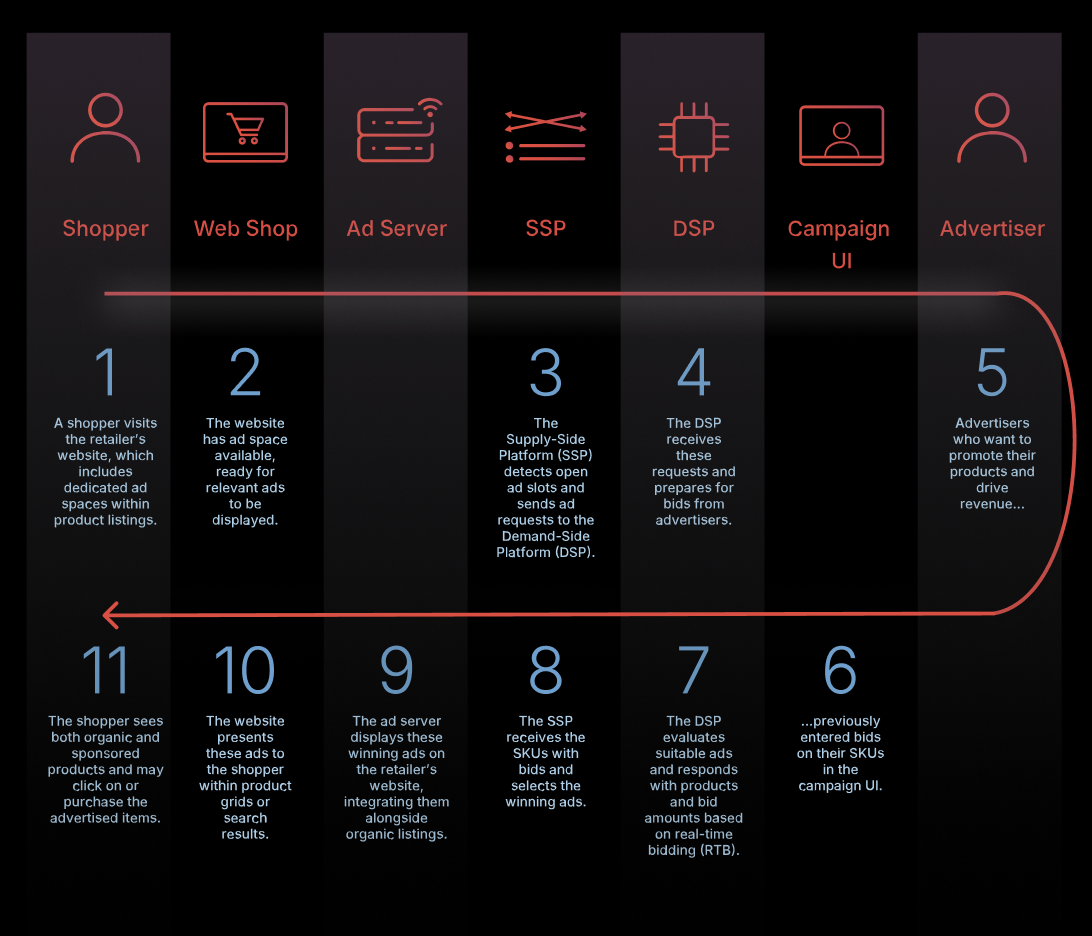
Here’s a quick overview of the typical flow of retail media ads on retailer websites:
The Starting Point: Microsoft PromoteIQ’s Monolithic Ad Tech Stack
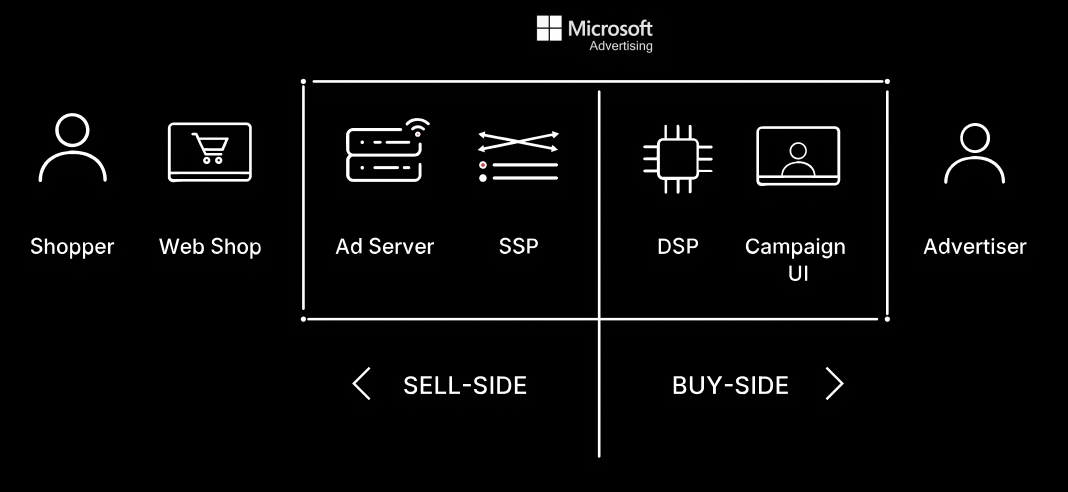
The U.S. home improvement retailer initially relied on Microsoft PromoteIQ’s all-in-one ad tech stack, a monolithic system that handled both sell-side and buy-side functions. This unified setup included ad serving, supply-side platform (SSP) operations, demand-side platform (DSP) features, and a campaign management UI, all within Microsoft’s framework. While this structure offered a straightforward, single-provider solution, it also presented limitations.
The RMN faced challenges with ad relevancy and delivery performance under the PromoteIQ stack. These issues hindered the effectiveness of their retail media network, impacting advertiser satisfaction and user engagement. Recognizing the need for a more flexible, modular approach, the retailer sought to modernize its retail media technology with minimal risk.
Instead of a disruptive full replatform, our client adopted a gradual, phased approach to integrate modular retail media technology, enabling them to upgrade individual components over time for a more tailored, high-performance solution.
Step 1: Replacing the Ad Server with Pentaleap for Improved Ad Relevancy
The home improvement retailer’s first significant upgrade focused on replacing only the sell-side while keeping the rest of the stack—including the Microsoft PromoteIQ frontend—intact. By switching to Pentaleap's Fluid Ad Server, this RMN improved the relevance and performance of its sponsored product ads without requiring brands to migrate to a new interface.
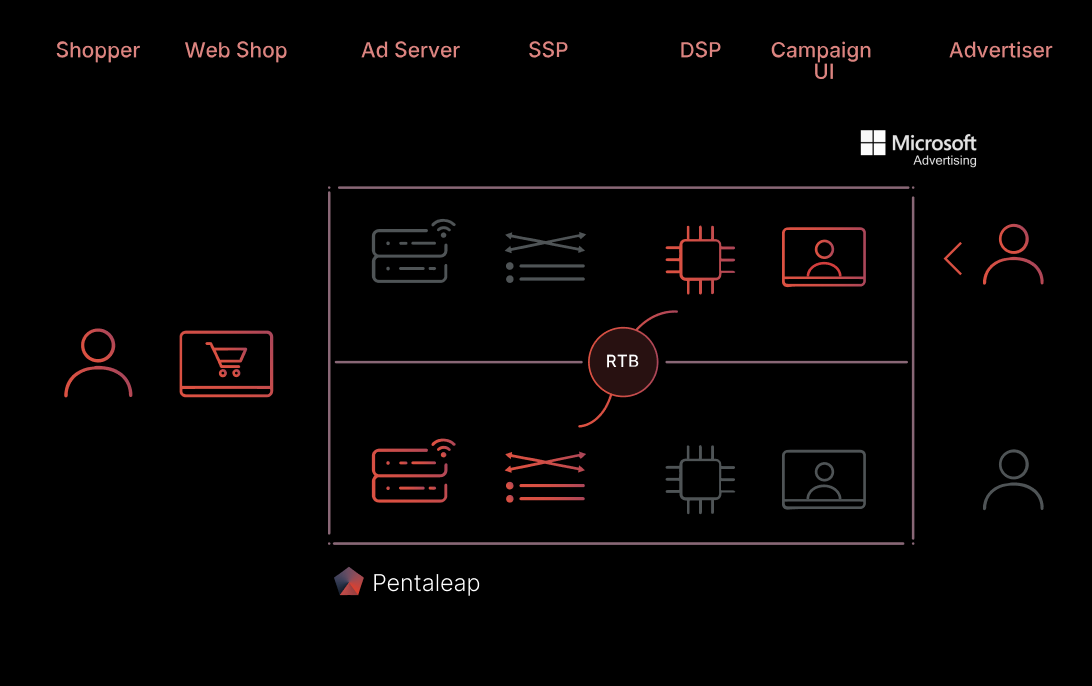
With Pentaleap’s Fluid Ad Server, the U.S. home improvement retailer increased paid content relevancy, enabling paid ad placements to reach click-through rates comparable to organic content. This step set a strong foundation for ongoing enhancements to the retailer’s media network.
Step 2: Launching its Proprietary Frontend for Unified Campaign Management
Following the sell-side upgrade, the home improvement retailer introduced its proprietary frontend, which was directly connected to Pentaleap’s DSP via API. This change came after Microsoft discontinued its PromoteIQ platform, and this new frontend became the retailer’s new user interface, allowing advertisers to manage both onsite and offsite campaigns from a single buy-side system.
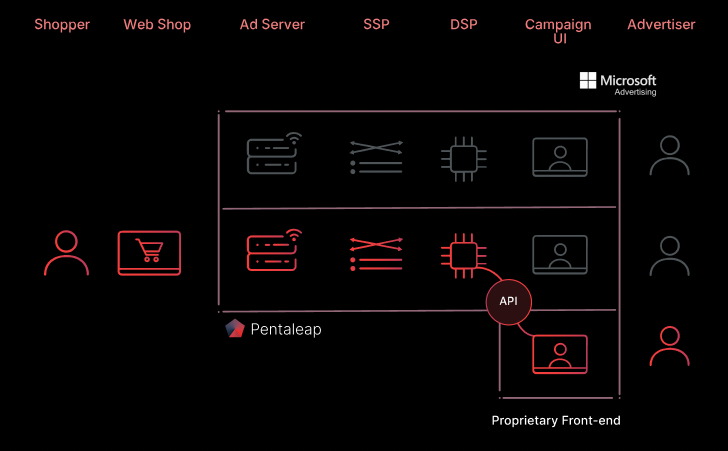
This integration empowered the U.S. home improvement retailer to further improve advertiser satisfaction and campaign effectiveness while ensuring the flexibility to introduce future enhancements.
A Best-in-Class Retail Media Tech Migration for Home Improvement Retailer
Our home improvement client’s modular upgrade approach provides a low-risk, high-value blueprint for retail media networks. By focusing on upgrading one, modular component at a time, this RMN was able to significantly enhance user experience, ad performance, and advertiser satisfaction without the costs and disruptions of a full replatform.
For other RMNs considering a similar journey, our client’s success illustrates first upgrading sell-side technology then transitioning advertisers to a new buy-side interface can deliver both immediate results and long-term adaptability.
With each component independently optimized, RMNs can maintain agility, staying responsive to new demands while preserving their ability to future-proof the tech stack.
Interested in learning how Pentaleap’s retail media solutions can drive performance gains for your network? Discover how our ad server can enhance ad relevancy, boost user engagement, and increase ad revenue—all without the disruption of a full replatform.
Stay Ahead with Retail Radar
Subscribe for cutting-edge insight into the latest retail media developments and trends
.png)

.webp)