.svg)


Retail Media’s Wild West, and What Comes After

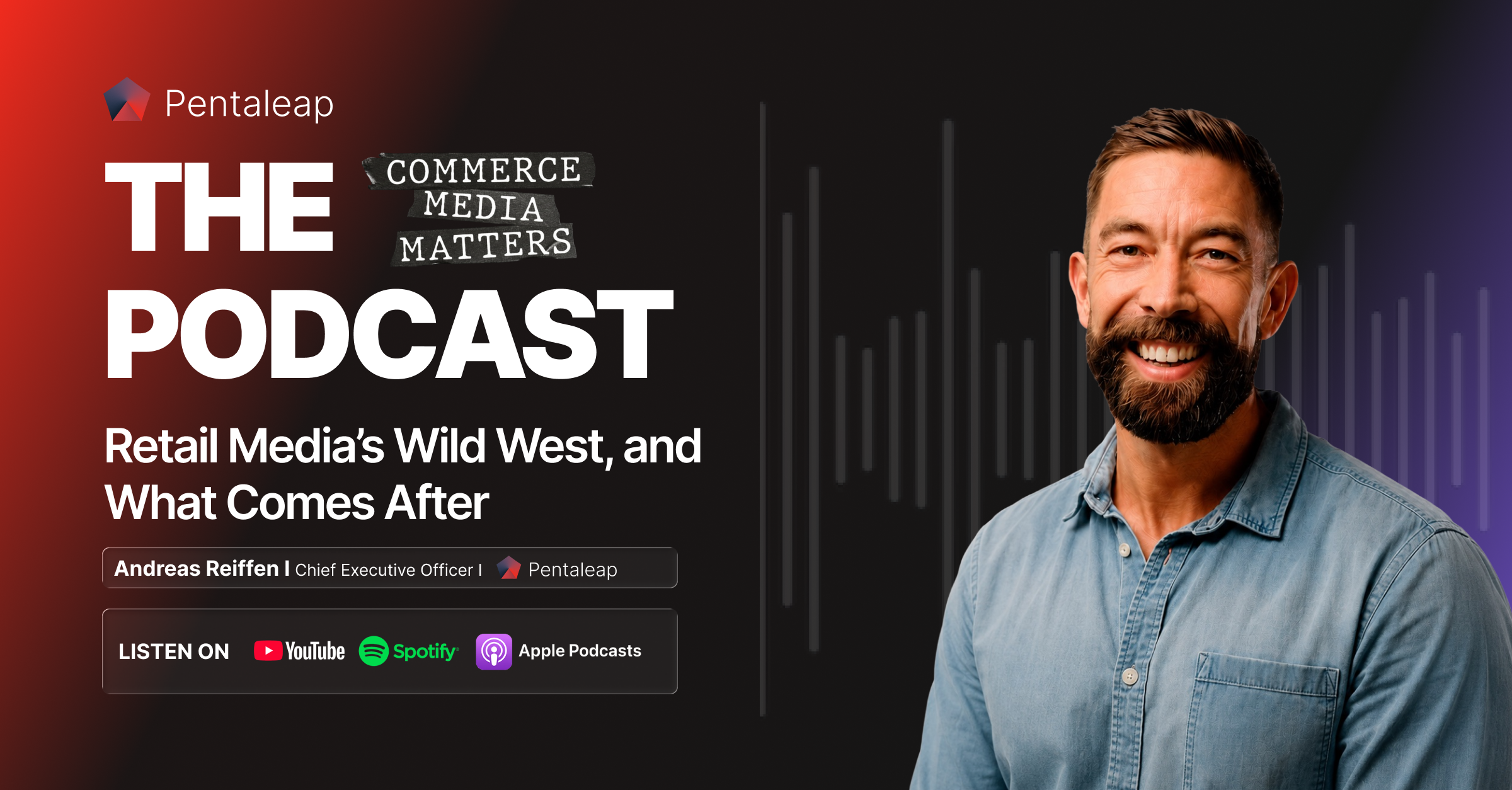
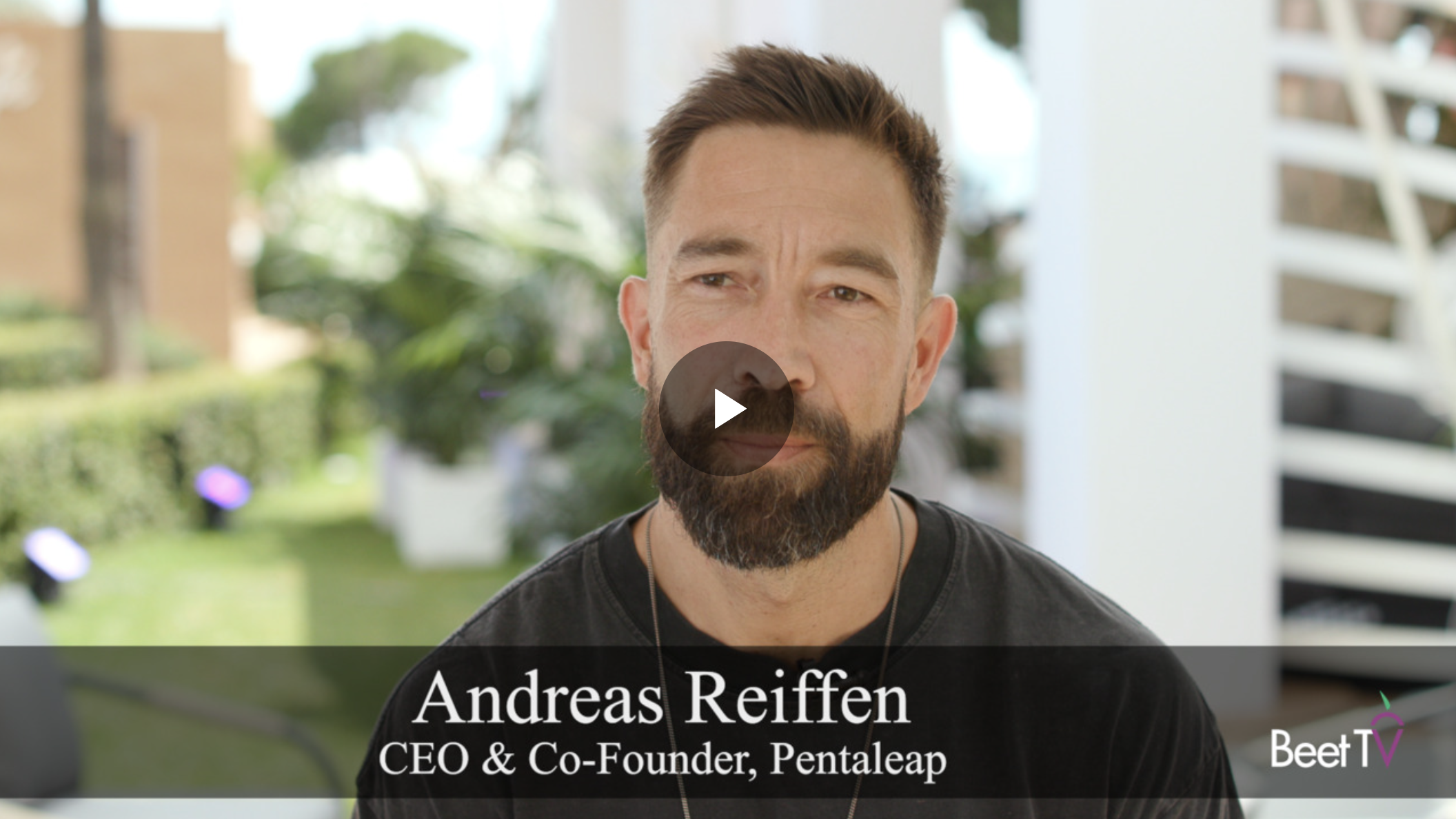
Andreas Reiffen, Founder and CEO of Pentaleap, joined Commerce Media Matters hosts Paul Blackburn and Nick Morgan to talk through where retail media actually stands. Reiffen previously founded Crealytics, helping major retailers rethink performance marketing and product advertising at scale, and spent time as one of the early architects of the retail media category. In this conversation, he covers why he started Pentaleap, what’s changed at retailers like Macy’s, CVS, and Home Depot, why growth is plateauing across most retail media networks, and what AI agents actually mean for the category.
TL;DR: Retail media has gone from a two-vendor market to an ecosystem of 10 to 15 specialized startups, and the competition now is between business models, not just companies. The two problems Reiffen set out to solve at Pentaleap were disconnected paid and organic ranking, and retailers stuck monetizing trade budget instead of true media spend. His read on where things are headed: decoupled architecture wins, measurement remains an unsolved incentive problem, AI agents become another channel rather than a retail killer, and retail media eventually just merges into media. Watch the full episode on YouTube.
Key Takeaways
- The original problem was two-part. Retailers were locked into incumbent vendors that bundled ad serving, frontend, and demand into one inseparable stack, while sponsored and organic rankings ran disconnected from each other.
- Business models are now competing, not just companies. Some vendors stay all-in-one, others specialize in headless ad serving or frontend orchestration, and retailers increasingly pair best-of-breed components.
- Trade budget is a structural ceiling, not a tooling problem. Retailers spend a small fraction of GMV on ads compared to Amazon’s roughly 8%, largely because brands’ media teams and trade teams rarely talk directly.
- Measurement is an incentive problem, not a tech problem. Vendors that profit from ad spend have little structural reason to push for rigorous measurement that might produce a less flattering ROAS.
- AI agents are a new channel, not an existential threat, as long as transactions and traffic still route back to the retailer’s own site.
- Branding and creative differentiation remain the hardest thing to automate, and Reiffen sees that as the next significant opportunity as the transactional side of advertising becomes increasingly AI-driven.
The Two Problems Pentaleap Was Built to Solve
Before starting Pentaleap, Reiffen and his team spent time listening to the market, running interviews with large retailers and retail media networks. What came back was consistent: frustration with incumbent technology, and a sense of being locked in with no real alternative.
Two problems stood out.
The first was relevance. Amazon makes roughly 80% of its retail media revenue from sponsored products, while most retailers were capturing a far smaller share of advertiser budgets. The reason wasn’t scale alone. It was a structural disconnect: paid and organic ranking operated in silos, optimizing for what advertisers wanted shown rather than what shoppers actually wanted to find. Irrelevant ads meant no click for the retailer and no sale for the brand.
The second was budget. Retailers kept hearing the same thing from brands: actual incremental media spend was hard to unlock. Most of what showed up labeled as retail media was simply relabeled trade budget. Brands were also frustrated at having to negotiate separately with dozens of fragmented retail media networks instead of buying programmatically across a network, as they could with traditional media.
Those two problems, relevance and budget access, became the founding thesis for Pentaleap.
The Pattern at Macy’s, CVS, and Home Depot: Fix Relevance First, Then Open Demand
Across Pentaleap’s case studies, Reiffen described a consistent sequence: start by fixing relevance, then expand demand.
At Macy’s, that meant layering unified ranking on top of the existing Criteo setup, then connecting Amazon via real-time bidding to bring in incremental demand beyond what the retailer’s direct sales team could access. The next phase, planned for later in 2026, extends that further by connecting native Google Ads demand directly.
At Home Depot, the focus was more on decoupling than demand. Campaign UI and frontend experience were separated from the ranking and ad-serving logic, with frontend orchestration handled by Vantage while Pentaleap unifies organic and sponsored ranking underneath. Reiffen described this combination, a dedicated frontend orchestration layer paired with a frontend-agnostic ad serving and ranking engine, as increasingly the direction the broader market is heading.
CVS followed a similar incremental path: keep the existing Criteo campaign UI for continuity, add unified ranking as a technology layer underneath, then connect Google Search demand to access budget beyond traditional retail media channels.
The pattern across all three: no retailer replaced its entire stack at once. Each added a unified ranking layer first, proved the relevance improvement, then used that foundation to open new demand sources.
The Market Has Gone From Two Vendors to Competing Business Models
Three years ago, Criteo and CitrusAd were essentially the only options in the market. Today there are 10 to 15 specialized startups, each chasing a different piece of the stack.
Reiffen frames this less as company-versus-company competition and more as a contest between business models. Some vendors came from ad serving and have been adding frontend and cross-channel capabilities.
Others started from frontend orchestration and are expanding into ad serving. A smaller group, Pentaleap among them, focuses on headless, frontend-agnostic ad serving logic that plugs into whichever orchestration layer a retailer already uses.
As the market matures, Reiffen expects the decoupled model to hold up better: more flexible tooling, lower lock-in, and often a lower combined price point than an all-in-one bundle. The tradeoff is that decoupled architecture requires someone on the retailer’s side who understands how to integrate the pieces.
Why Most Retail Media Networks Are Below 1% of GMV
A useful gut-check Reiffen offered: compare ad revenue to total GMV. Amazon sits at roughly 8%. Most other retail media networks are below 1%, even after adjusting for scale.
Two structural reasons explain the gap.
First, discoverability dynamics differ. Amazon’s marketplace is large enough that sponsoring a product is close to mandatory just to be seen. Roughly 75 to 80% of Amazon’s retail media revenue comes from sponsored products alone. Retailers without that same discoverability pressure don’t generate the same advertiser urgency.
Second, trade budget, not true media budget, still dominates. Many retail media networks are essentially relabeling existing trade spend rather than unlocking new dollars, because media buyers and brands’ trade teams rarely talk directly.
Reiffen’s prediction is a tiered market: a handful of large retailers, Home Depot among them, running their own closed networks with enough scale to justify a full sales organization; a middle tier running hybrid direct-plus-programmatic models; and smaller retailers, particularly in fragmented verticals like pharmacy, relying on networked or backfilled programmatic demand.
Measurement Is an Incentive Problem, Not a Tech Problem
Reiffen’s background advising large advertisers buying from Google and Meta shaped a skeptical view of platform-reported performance. Whoever profits from the spend also controls the currency used to measure its success. That’s an inherent conflict.
He sees the same pattern now in retail media. Brands say they want transparency, but what they often want is a strong-looking ROAS paired with a methodology that feels credible, and those two things frequently pull in opposite directions. Rigorous incrementality testing tends to produce less flattering numbers than platform-reported attribution.
His practical advice for brands: triangulate. Combine multi-touch attribution (granular, bottom-up) with incrementality testing (switching spend on and off in specific markets) and marketing mix modeling (top-down) to converge on a more honest picture. It’s resource-intensive, and easier to do with Google or Meta, where geo-experiments are well supported, than with most retail media networks. He pointed to Incremental, Haus.io, and Measured as specialists worth considering if a brand has meaningful budget at stake.
AI Agents Are a New Channel, Not a Retail Media Killer
Reiffen drew a clear distinction between two types of agentic commerce.
First-party agents, like Amazon’s Rufus, operate within the retailer’s own site and can be monetized the same way existing onsite inventory is, including sponsored placements within agent responses.
Third-party agents, including ChatGPT, Gemini, and similar, are often framed as an existential threat to retail media. Reiffen pushed back on that framing. The real risk isn’t to retail media specifically; it’s to the retail model itself, if shoppers stop visiting retailer websites and transactions move entirely into the agent interface. A retailer that no longer owns the customer relationship becomes, in his words, a fulfillment company.
His expectation: as long as agent-driven traffic and transactions still route back to retailer sites, this becomes another channel in the mix, similar to how social commerce and marketplaces were each predicted to displace retail and instead became incremental contributors. He estimated AI-driven commerce might eventually represent 5 to 10% of volume, not a wholesale shift.
Retail Media and Traditional Media Are Converging
Several threads in the conversation pointed toward the same destination. As programmatic and RTB connectivity make it easier for budgets, including Google’s PMax, to flow into onsite retail inventory, the boundary between media and retail media will blur. Reiffen’s expectation is that the term “retail media” eventually falls away as the two categories merge.
He closed with a note on what won’t be automated: branding and creative differentiation. As the transactional layer of advertising becomes increasingly handled by AI and automated bidding, brand-building is where human judgment, and real competitive advantage, will continue to matter.
FAQ
Why do most retail media networks capture so little of brand budgets? Two reasons. Most retail media revenue is still repurposed trade budget, not incremental media spend, because brands’ trade teams and media teams rarely interact directly. And most retailers don’t generate the same discoverability pressure as Amazon, which means advertisers feel less urgency to sponsor products just to stay visible.
What is the difference between a decoupled and an all-in-one retail media stack? An all-in-one stack bundles ad serving, campaign management, frontend, and demand into a single vendor relationship. A decoupled stack separates those layers, letting retailers choose the best tool for each function and swap components without rebuilding everything. The tradeoff is integration complexity on the retailer’s side.
Why is retail media measurement so difficult to trust? The vendors who profit from ad spend also control how performance is reported. That creates an inherent incentive to use attribution methodologies that produce flattering results. Rigorous incrementality testing consistently produces lower ROAS numbers than platform-reported attribution, which is why brands doing their own measurement often see a different picture than the one the platform shows them.
Should retailers be worried about AI agents? Not about retail media specifically. The risk is to the retail relationship itself: if shoppers stop visiting retailer sites, the retailer loses the customer relationship and becomes a pure fulfillment operation. But if agent-driven traffic still routes back to retailer sites, AI commerce becomes another channel, not a replacement.
This post is based on a conversation between Paul Blackburn and Nick Morgan of Voodoo and Andreas Reiffen, Founder and CEO of Pentaleap, on the Commerce Media Matters podcast. Watch the full episode on YouTube.
Stay Ahead with Retail Radar
Subscribe for cutting-edge insight into the latest retail media developments and trends
.png)

.webp)