Why an Irrelevant Sponsored Product Costs Pharmacy Retailers Most


A shopper searching a pharmacy site is rarely browsing. They're looking for one specific thing, a refill, a remedy, a brand they already trust, and they want it fast. The search engine ranking that page knows this. It's built on relevance and personalization, tuned to get that shopper to the right product quickly. The ad server ranking the sponsored slots next to it knows something else entirely: who bid the most. Neither system knows what the other is doing, and both are deciding what this one shopper sees.
That mismatch exists on every retail site. It just costs more in pharmacy.
TL;DR
- Sponsored and organic products are usually ranked by two separate systems with two different goals, one on bid price, one on relevance. Neither has visibility into the other's decision.
- In pharmacy, that mismatch is more expensive: shoppers are searching with specific intent, on a site where trust is most of the reason they're there, so an irrelevant sponsored product costs more than a wasted impression.
- The fix isn't a new ad server or a new search engine. It's a ranking layer that sits between the two systems already in place, using the retailer's own search AI to rank sponsored products the same way it already ranks organic ones.
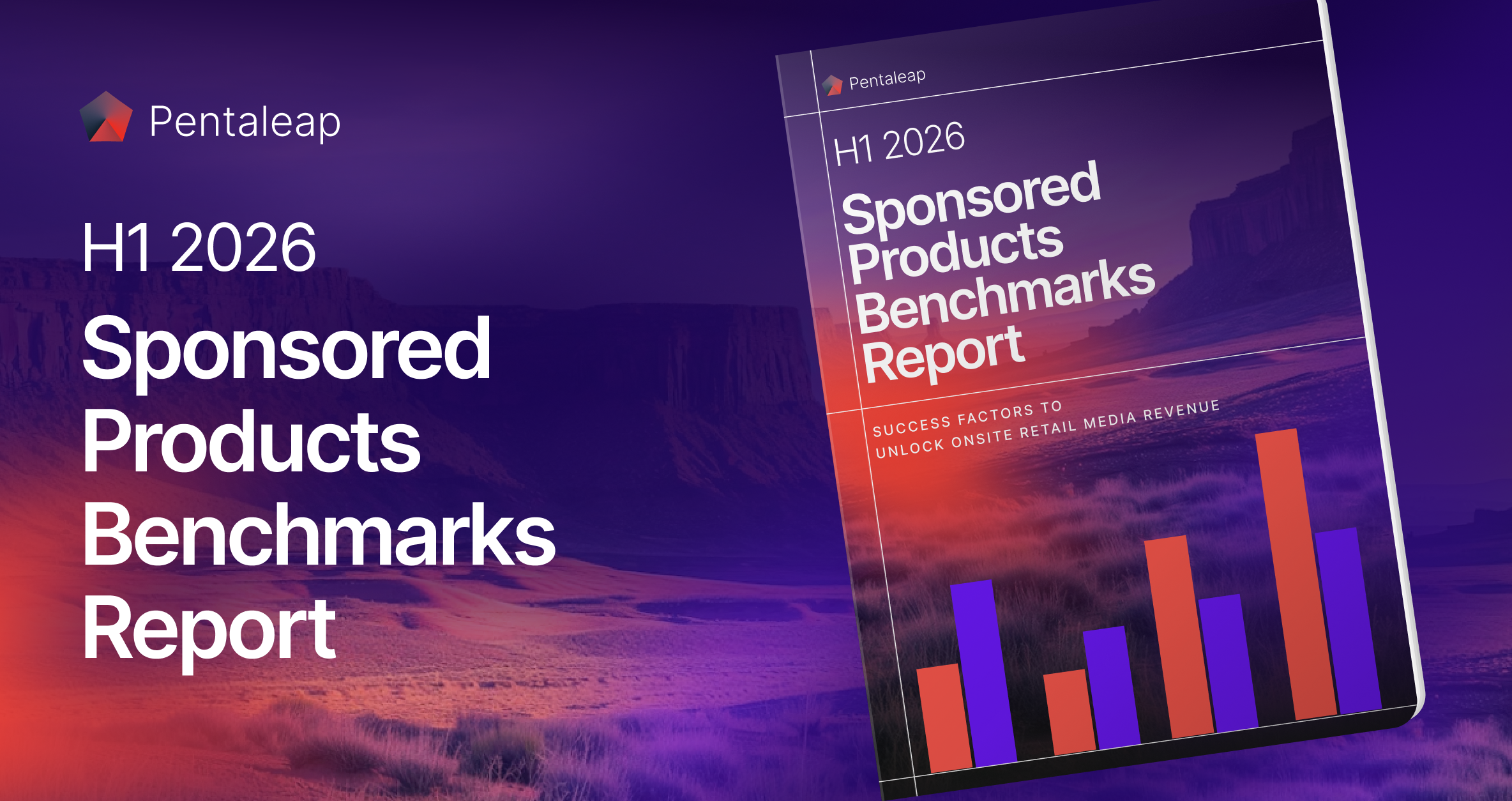
- Pentaleap's own H1 2026 data across its retailer base shows fixing ranking alone produces a 101% lift in ad revenue, 152% more click-through, and 35% higher conversion on average, including at another pharmacy retailer already running the same fix in production.
- In a case study of one leading U.S. pharmacy chain, daily Sponsored Products ad revenue rose 133.6% after making this change, with paid CTR reaching organic CTR levels, in an integration that took two weeks and left the retailer's existing ad server, campaign UI, and demand partner untouched.
Two systems, one grid, two different jobs
Walk through what actually happens when a shopper searches "allergy relief" on a pharmacy site. The search engine ranks the organic results using everything it knows about relevance and intent. Separately, the ad server decides which sponsored products get a slot, almost always based on who bid the most, with no visibility into whether that product is actually what this shopper is likely to want. It's less a ranking decision and more two pharmacists filling the same order from opposite ends of the counter, never once comparing notes.
Most retail media pitches treat this as a feature gap: buy a better ad server, get a smarter algorithm, add more inventory. That misses the actual problem. The issue isn't that either system is unsophisticated. It's that they're making two separate decisions using two different sets of signals, and nobody's reconciling them before the page loads.
Why pharmacy shoppers notice it first
For most retail categories, that mismatch shows up as a few wasted impressions and a shrug. In pharmacy, it shows up faster and costs more, for two reasons that are specific to the category.
First, the intent is narrower. A shopper isn't browsing for inspiration; they searched for something specific, and a sponsored product that misses that intent is immediately, visibly wrong, not just a little off-target. Second, the catalog itself is a mix that most categories don't have to manage: over-the-counter remedies, prescription-adjacent products, beauty and wellness, general merchandise, often on the same grid. A ranking system built only to serve bids doesn't know the difference between these categories carrying different expectations for accuracy and trust. A shopper who clicks a sponsored antihistamine that isn't what they were looking for doesn't shrug it off the way they might with a sponsored phone case. They lose a beat of trust in the search results generally, on a site where trust is most of the reason they're there.
Fixing the ranking decision, not replacing the stack
The instinct is to assume fixing this means replacing the ad server, the search engine, or both. It doesn't have to. The ranking decision, what shows up and why, can live in an independent layer that sits between the two systems already in place. That layer uses the retailer's own search AI, the same relevance, margin, and conversion signals it already applies to organic results, and applies it to sponsored products too, instead of leaving them to be ranked by bid price alone in a separate silo.
Nothing about that requires ripping out what's already running. The existing ad server can stay in place as a demand source. The existing campaign UI stays exactly as advertisers know it. The only thing that changes is which system makes the ranking call, and what information it's allowed to use when it does.
If you're hesitant to hand a ranking decision to a new layer on top of a stack that already works well enough, that's a fair instinct, not a reason to skip the question. Nobody wants to introduce a new point of failure into a page that's already converting. The honest answer is that you don't have to take that on faith: the same layer can run as an A/B test against your current setup first, with nothing else about the site changing, so the case for switching gets made by your own numbers before anything becomes permanent.
What the fix is actually worth, in numbers
Across Pentaleap's retailer base, fixing ranking this way, without adding new demand sources or new ad slots, produces a 101% lift in ad revenue, 152% more click-through, and 35% higher conversion on average, per Pentaleap's own H1 2026 internal data. That pattern holds in pharmacy specifically: Pentaleap already runs this fix in production with another pharmacy retailer today, alongside other major retail chains.
The clearest illustration, though, is a U.S. example. One leading U.S. pharmacy chain's own result is a useful, specific look at what that pattern produces inside a single retailer. Running its existing demand through the same kind of ranking layer, with no new ad slots and no changes to how advertisers bought, its daily Sponsored Products ad revenue rose 133.6%, according to Pentaleap's case study of the integration. Separately, Pentaleap's public summary of the same engagement frames the broader result as up to 2x ad revenue from expanded inventory access. The number worth sitting with alongside either figure is that paid product CTR climbed to match organic CTR during the same test, meaning the lift came from relevance, not from showing shoppers more ads. Technical integration took two weeks, and the retailer's existing ad server, campaign UI, and demand partner all stayed in place throughout.
A lift measured against a retailer's own baseline, on its own traffic, with a control group and nothing else changing, is a different kind of claim than a chart pulled from somebody else's stack. It's also the same discipline any procurement or CFO stakeholder should ask for before believing any vendor's slide: whose traffic was this measured on, and was there actually a comparison group.
Relevance is what makes more demand worth adding
Fixing the ranking decision isn't the end of the story, it's what makes the next step worth taking. For the pharmacy chain in this example, connecting incremental demand from Google is next on the roadmap, with Real-Time Bidding and additional demand partners, including Microsoft, Skai, and Pacvue, following behind, still in development and not yet live.
The real reason to sequence it this way isn't tidiness. Connecting Google or Amazon demand into a page that's still ranking sponsored and organic products against two different logics just adds a third opinion to an argument that was never resolved. Fix the decision first, and every additional demand source that gets connected afterward is competing on the same, coherent set of signals instead of adding to the noise.
The decision this actually creates
None of this is an argument for a bigger platform, a rip-and-replace, or taking a vendor's word for a lift number measured on somebody else's traffic. It's an argument for checking something concrete on your own site: are your sponsored and organic rankings currently working from the same information about what your own shoppers actually want, or are they two systems making two separate bets on the same page. That's a question worth testing against your own catalog and your own baseline, not one worth guessing at.
Key Takeaways
- Sponsored and organic products are typically ranked by two separate systems with two different goals, bid price versus relevance, with neither aware of the other's decision.
- Pharmacy shoppers search with narrower intent and less tolerance for irrelevant results, on a site where trust is the main reason they're there, so the cost of getting ranking wrong shows up faster than in most retail categories.
- The fix is an independent ranking layer using the retailer's existing search API, not a new ad server or search engine, and it doesn't require replacing the existing stack.
- Pentaleap's own H1 2026 data shows fixing ranking alone produces a 101% average lift in ad revenue, 152% more click-through, and 35% higher conversion across its retailer base, including at another pharmacy retailer already running it in production.
- In a case study of one leading U.S. pharmacy chain, Pentaleap reports a 133.6% increase in daily Sponsored Products ad revenue and paid CTR reaching organic CTR levels, with a two-week integration and no changes to the retailer's existing ad server, campaign UI, or demand partner.
- Fixing relevance first is what makes connecting additional demand sources, like Google, worth doing afterward, rather than adding a third opinion to an unresolved ranking decision.
Frequently Asked Questions
How does Pentaleap actually work?
It sits between a retailer's existing ad server and its product grid, letting the retailer's own search AI rank sponsored products the same way it already ranks organic ones, using signals it already has: margin, relevance, conversion. It isn't a new ad server replacing what's there; it's a layer connecting systems that already exist.
Does this mean replacing our ad server or search platform?
No. The existing ad server can stay in place as a demand source, and the existing campaign UI and search platform aren't touched. One leading U.S. pharmacy chain kept its ad server, campaign UI, and demand partner in place throughout its own integration.
How do you actually know a lift like this is real, and not just a vendor's number?
Look for a randomized test measured against the retailer's own traffic and its own existing baseline, not a benchmark borrowed from somebody else's stack. One group sees sponsored ranking handled the conventional way; another sees the same demand routed through the ranking layer instead. The only variable should be which system makes the ranking decision.
How long does implementation take?
Most retailers go live with a four-week A/B test running alongside their existing stack, with no disruption to advertiser workflows. Technical integration for one pharmacy chain specifically took two weeks, according to Pentaleap's case study of that engagement.
Is this specific to one pharmacy chain, or does it hold up across the category?
No. Pentaleap's unified ranking layer runs in production with more than one pharmacy retailer, alongside other major retail chains, some for several years. Across that retailer base, Pentaleap's own H1 2026 data shows the same ranking fix produces a 101% lift in ad revenue, 152% more click-through, and 35% higher conversion on average, consistent with the 133.6% result the U.S. chain in this piece saw on its own traffic.
Stay Ahead with Retail Radar
Subscribe for cutting-edge insight into the latest retail media developments and trends