.svg)


Why Real-Time Bidding Might Finally Be Ready for Primetime in Retail Media

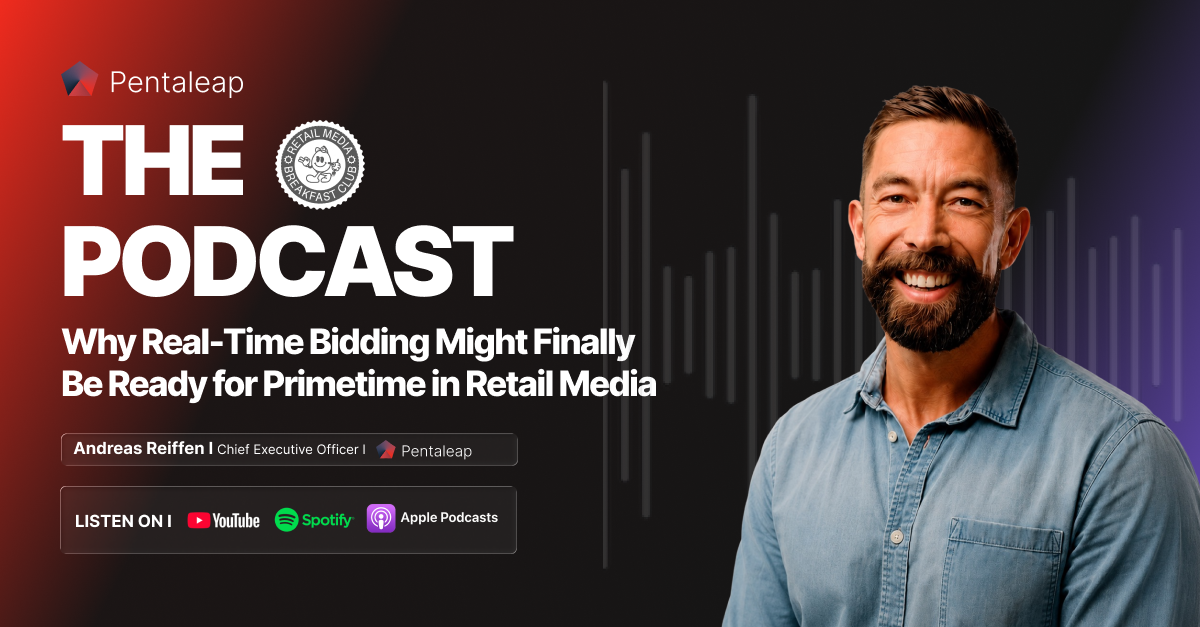
Notes from the Retail Media Breakfast Club podcast, with host Kiri Masters
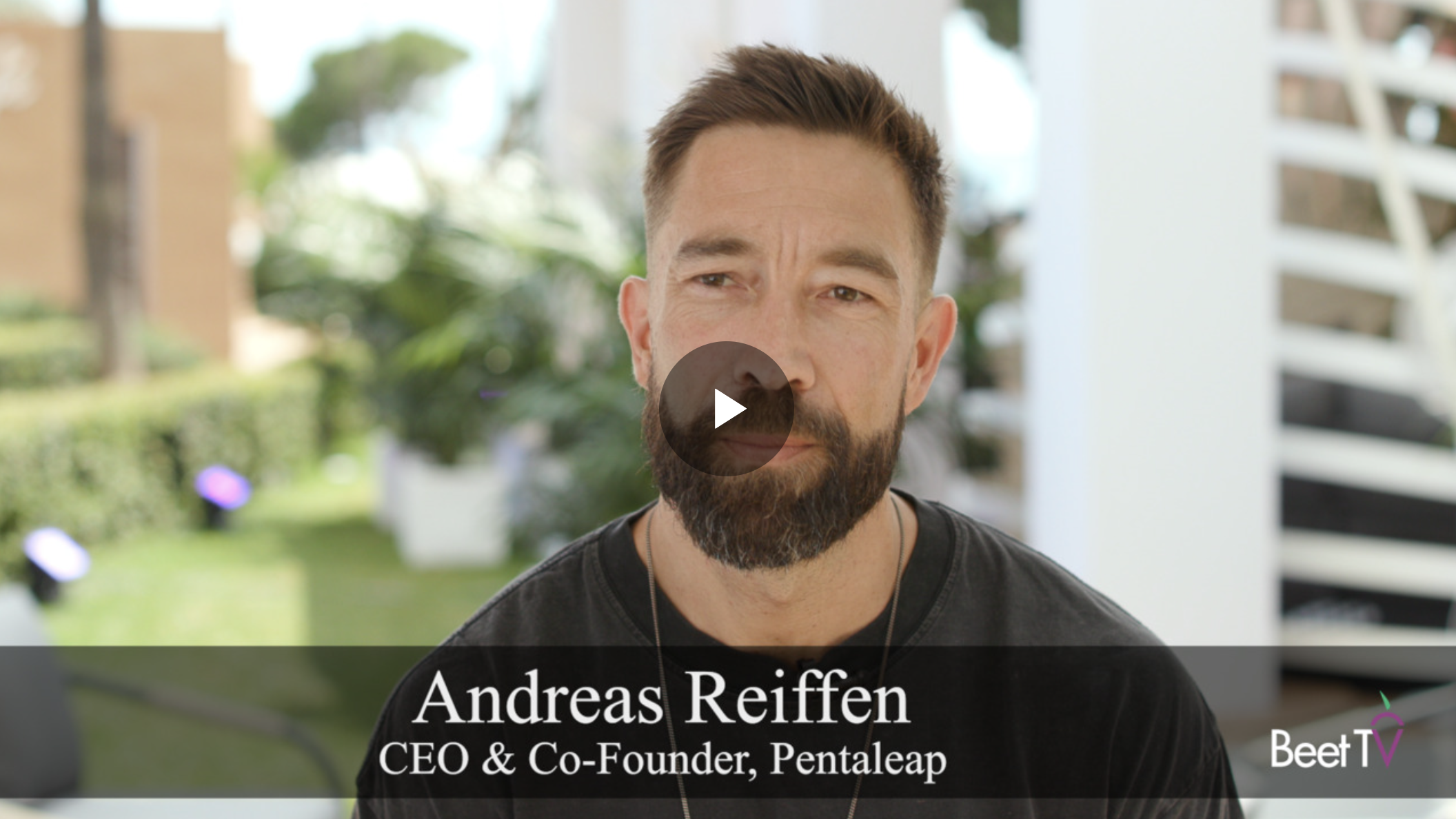
On this episode of Retail Media Breakfast Club, host Kiri Masters revisits a conversation with Andreas Reiffen, Founder and CEO of Pentaleap, recorded during a live stream and later reconstructed from transcript after some technical difficulties. The topic is real-time bidding (RTB) in retail media, a term that still carries baggage from its early programmatic display days: low-quality inventory, brand safety concerns, and money disappearing through opaque supply chains. Reiffen's view is different. He sees RTB as the mechanism that finally connects two worlds that have struggled to reach each other: the media budgets agencies control, and the retailers who need access to them without managing dozens of individual relationships.
TL;DR: Masters and Reiffen walk through three developments shaping where RTB is headed in retail media. First, Reiffen expects most retailers to open their walled gardens to some degree, largely because the long tail of smaller brands they can't reach through direct sales is already spending money elsewhere, and RTB offers an easy way to capture a slice of it. Second, RTB is starting to extend beyond onsite sponsored products into retailer-led ad networks, where a larger retailer's tech powers smaller retailers in the same category. Third, the same RTB logic applies to B2B retail media, with the key difference being how customer lifetime value gets calculated and targeted. Reiffen's prediction: something close to a 50/50 split between direct and programmatic-style demand within five years. Listen to the full episode wherever you get your podcasts.
How Much of Retail Media Could Eventually Run Through RTB
Asked directly what share of retail media might eventually be delivered through RTB, Reiffen didn't hedge. He described an industry currently under real pressure, having set expectations too high in retail media's early growth phase, and now searching for any credible way to bring in incremental dollars. In that environment, he expects most retailers to open their walled gardens to some extent and let programmatic-style demand in.
The logic, in his view, comes down to concentration. Most retailers generate the bulk of their advertising revenue from a relatively small number of top brands, often the top 20 to 50. Everyone below that tier is much harder to reach through direct sales relationships. Since those smaller brands are already spending money elsewhere, whether they'll actually get direct access through the top tier of a retailer's demand or how exactly this gets managed remains to be seen, but Reiffen sees no real reason to exclude that backfill opportunity. Capturing even a portion of budget that would otherwise go to another channel entirely is a straightforward win.
RTB Is Expanding Beyond Onsite Sponsored Products
Masters pushed further: is RTB limited to onsite sponsored product ads, or does it have a future in offsite formats like display and video? Reiffen expects it will extend there eventually, and pointed to a live example already underway: a retailer-led ad network Pentaleap is currently building for a client.
The mechanics work like this. A larger retailer running its own ad network operates on Pentaleap's technology. Smaller retailers in the same category, ones without the scale to justify standing up their own retail media network, connect their own demand-side platforms to respond in real time to ad requests coming through that network. Reiffen noted Best Buy is pursuing a similar model. The next phase, using the network's first-party data to target those same customers offsite, is more complex to execute in markets like Germany given privacy constraints, but the underlying structure is already in motion.
Reiffen's expectation is that outcomes will vary by retailer size. Larger retailers will likely continue handling the majority of demand directly, using RTB mainly to backfill what direct sales can't reach. Smaller retailers, particularly those that join a retailer-led network rather than building their own, may end up sourcing nearly all of their retail media revenue through that programmatic layer, simply because direct access to meaningful media budgets was never realistic for them in the first place. Reiffen's five-year guess: something close to a 50/50 split between direct and programmatic-style demand across the market, though he was clear that's an estimate, not a forecast anyone can fully verify today.
The Same Logic Applies to B2B Retail Media, With One Key Difference
The conversation then turned to B2B, an area Reiffen said is technically almost identical to consumer retail media when it comes to ad serving itself. The real difference sits on the brand side, specifically in how customer lifetime value gets calculated.
Reiffen described a client that runs both a B2C and a B2B platform, selling a similar range of products but under very different logic. A single consumer purchase is just that, a single transaction. Winning a business account, by contrast, often means recurring orders over time, so the real value of that customer isn't visible in the first transaction alone; it requires reporting that accounts for repeat purchases and long-term relationship value rather than one-off sales.
Using Home Depot as an example, Reiffen pointed out that professional buyers, contractors and tradespeople, represent a meaningfully different and often more valuable audience than typical consumer shoppers. Rather than excluding audiences outright, Pentaleap's approach uses bid modifiers, letting a brand specify something like a 150% bid increase when a product is shown to a professional buyer. Since sponsored product placement tends to be driven more by context than by broad audience targeting, this kind of segmentation lets brands adjust their bidding behavior for a high-value segment without needing an entirely separate targeting system.
FAQ
What is real-time bidding (RTB) in retail media? It's a mechanism that lets major ad platforms, such as Google, Microsoft, or The Trade Desk, connect directly to a retailer's onsite inventory. When a shopper visits a site, an ad request goes out in real time and those platforms respond with relevant product ads within milliseconds. The retailer retains control over what inventory is available and which brands can participate.
Why is fragmentation such a persistent problem in retail media? Retailers struggle to access the larger media budgets that agencies and big ad tech platforms control, while brands are reluctant to manage separate buying relationships with dozens of individual retailers. RTB is designed to bridge that gap by giving brands a way to reach retail inventory through platforms they already use.
What is a retailer-led ad network? It's a model where a larger retailer's ad-serving technology powers a network that smaller retailers in the same category can join, responding to ad requests through their own demand-side platforms in real time. It gives smaller retailers, who couldn't justify building a full retail media network on their own, a way to participate in the category and eventually target shared customers across the network.
Does B2B retail media work differently from B2C? The ad-serving mechanics are largely the same. The meaningful difference is in how value gets measured. B2B customers often represent significant repeat purchase value that a single transaction doesn't capture, which changes how brands should think about reporting and bidding, rather than changing the underlying technology.
This post is based on a conversation between Kiri Masters of Retail Media Breakfast Club and Andreas Reiffen, Founder and CEO of Pentaleap. Listen to the full episode wherever you get your podcasts
Stay Ahead with Retail Radar
Subscribe for cutting-edge insight into the latest retail media developments and trends
.png)

.webp)