.svg)


Why Retail Media Needs to Look More Like Programmatic, Not Less


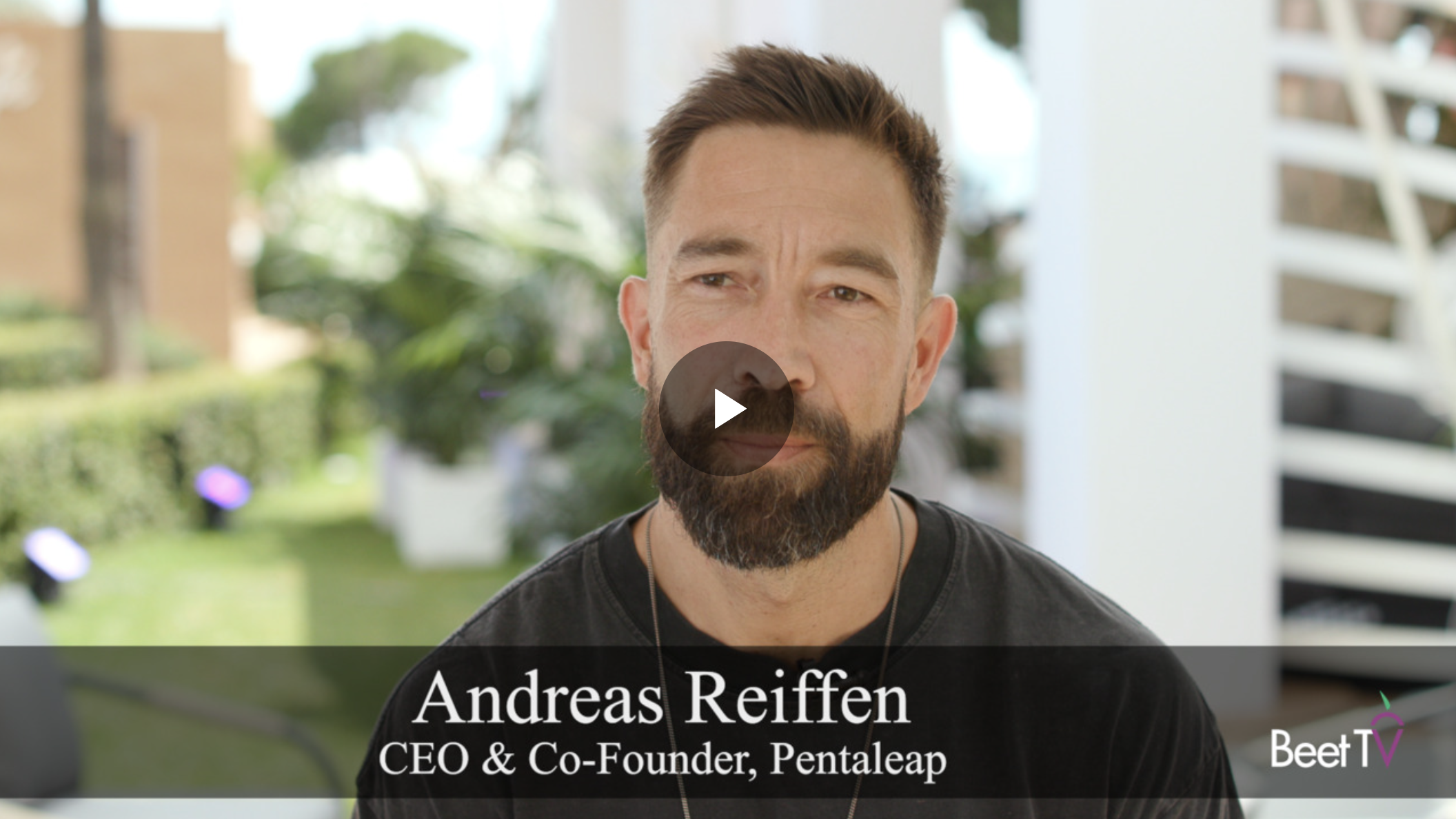
Andreas Reiffen, Founder and CEO of Pentaleap, joined The FMCG Guys podcast to talk about retail media's structural problem, and what retailers can do about it.
TL;DR: Retail media has grown fast, but most of it is still built like a closed ad network rather than an open, programmatic ecosystem. Andreas Reiffen, our founder and CEO, joined host Daniel Torres on The FMCG Guys podcast to unpack why Amazon captures a disproportionate share of retail media spend, why most retail media networks (RMNs) hit a ceiling, and what a more durable path to growth looks like. His answer: fix relevance first, then expand ad inventory, then open up demand. Watch the full episode on YouTube.
Key Takeaways
- Amazon's dominance is about relevance, not just size. Amazon holds roughly 38% of US ecommerce but captures 75–78% of US retail media spend. The gap comes from how well sponsored products perform alongside organic ones, not scale alone.
- Retail media is structured like an old ad network. Most retailers are tied to a single vendor covering ad serving, campaign management, and demand, unlike programmatic display, which grew through open, multi-vendor ecosystems.
- The fragmentation pushes brand budgets toward Amazon. Brands managing a dozen or more separate vendor relationships often default to concentrating spend where it's simplest, reinforcing the dominance the fragmentation was meant to prevent.
- The sequence matters: relevance, then inventory, then demand. Retailers who fix relevance before expanding ad space tend to see it hold up. Retailers who expand inventory first tend to see it backfire.
- Off-site retail media isn't the shortcut it looks like. Margins and ROAS are typically weaker off-site, and most retailers circle back to fixing on-site monetization eventually.
- Google and Microsoft are a wildcard worth watching, as retail media search increasingly outpaces search on their own properties.
Retail Media's Structural Problem
Retail media has grown into a major line item on both the retailer and brand side, but the infrastructure underneath it hasn't kept pace with the model that made programmatic advertising work.
In programmatic display, brands can connect to hundreds of supply-side platforms and thousands of demand-side platforms in an open, low-friction ecosystem. Retail media, by contrast, has largely asked retailers to commit to a single vendor for the entire stack: ad serving, campaign management, and demand, all funneled through one sales team.
For brands, that means managing separate relationships, reporting, and negotiations across a dozen or more closed retail media networks just to deploy a single budget. Reiffen's observation on the podcast was direct: that fragmentation is a real source of friction for brands, and it often pushes them to simply concentrate spend on Amazon rather than navigate it. The very structure meant to create competition ends up reinforcing the opposite.
Why Amazon Captures Such an Outsized Share
Amazon holds around 38% of US ecommerce, yet captures somewhere between 75% and 78% of US retail media ad spend. Scale gives Amazon negotiating leverage, since most brands can't afford not to be present there, but Reiffen points to a more specific driver: relevance.
Amazon, like Google and Meta before it, has steadily expanded how much of its inventory is paid without losing shoppers, because its sponsored placements perform close to as well as organic ones. That's the mechanic most retail media networks haven't cracked yet. Push too much low-relevance sponsored inventory into a grid, and it doesn't just hurt ad performance. It drags down organic click-through and conversion too, eating into retail margin in a way that can outweigh whatever the extra ad revenue brought in.
Walmart, Reiffen noted, has made real progress here by building its own technology and following a similar approach, expanding paid inventory while keeping cost-per-click broadly stable. Its ad-revenue-to-ecommerce-revenue ratio still trails Amazon's, but that gap has more to do with the size of its ecommerce base than a technology shortfall.
The Fix: Relevance First, Then Inventory, Then Demand
Asked what he tells retailers frustrated with their own retail media performance, Reiffen described a pattern he sees often: retailers hit a perceived ceiling on-site and pivot to off-site media, drawn by the promise of larger addressable audiences. In practice, off-site tends to disappoint on margin and ROAS, functioning more as a branding play than a performance one, and it hits its own ceiling quickly.
The more durable path starts on-site, in the same place Amazon generates most of its own ad revenue: sponsored products. Reiffen's recommended sequence is straightforward:
1. Fix relevance first. Aligning sponsored and organic ranking around a single, unified system, rather than running them as separate silos with fixed ad slots, is where most of the early gains come from.
2. Expand inventory once relevance holds up. Only after sponsored products are proven to convert as well as organic ones does it make sense to grow the share of the grid dedicated to ads.
3. Open up demand when the foundation is ready. Connecting additional demand sources works best once the ranking and inventory decisions underneath it are already sound.
Retailers who try to expand inventory before fixing relevance tend to run into internal pushback once the data shows it's doing more harm than good.
What This Means for Retailers Today
The retailers making the most progress are treating sponsored and organic ranking as one decision, not two. Shoppers don't distinguish between paid and organic results; they're looking for the right product. Building toward that requires treating bid value as one input into a single ranking system, rather than bolting sponsored logic onto a separate, siloed engine.
Reiffen also pointed to something worth watching over the next two years: as search activity inside retail media platforms keeps outgrowing search on Google's and Microsoft's own properties, both companies are likely to push harder to supply demand into retail media inventory. The mix is also likely to keep shifting toward open, network-based demand rather than direct, private relationships alone, echoing how Amazon's third-party marketplace has grown faster than its first-party retail business.
A Note for Brands
Reiffen's advice to brands on the podcast was equally direct: no retailer will hand over fully independent, incrementality-tested numbers that also happen to look flattering, since publishers are naturally incentivized to present their best case. Brands that build their own measurement and testing capability are in a stronger position to validate what they're actually getting, rather than taking platform-reported ROAS at face value.
FAQ
Why does Amazon dominate retail media spend? Primarily relevance, not just scale. Amazon has expanded its paid inventory over time without hurting the shopper experience, because its sponsored products perform close to as well as organic ones.
What's structurally wrong with most retail media networks today? Most are built like closed, single-vendor ad networks rather than open, programmatic ecosystems, creating friction for brands and limiting how efficiently demand and inventory can scale.
Should retailers expand off-site before fixing on-site retail media? Generally no. Off-site tends to carry weaker margins and ROAS. Retailers see more durable results by improving on-site relevance and inventory first.
This post is based on a conversation between Daniel Torres of The FMCG Guys podcast and Andreas Reiffen, Founder and CEO of Pentaleap. Watch the full episode on YouTube.
Stay Ahead with Retail Radar
Subscribe for cutting-edge insight into the latest retail media developments and trends
.png)

.webp)