.svg)


Why Retail Media's Amazon Gap Comes Down to Two Fixable Problems

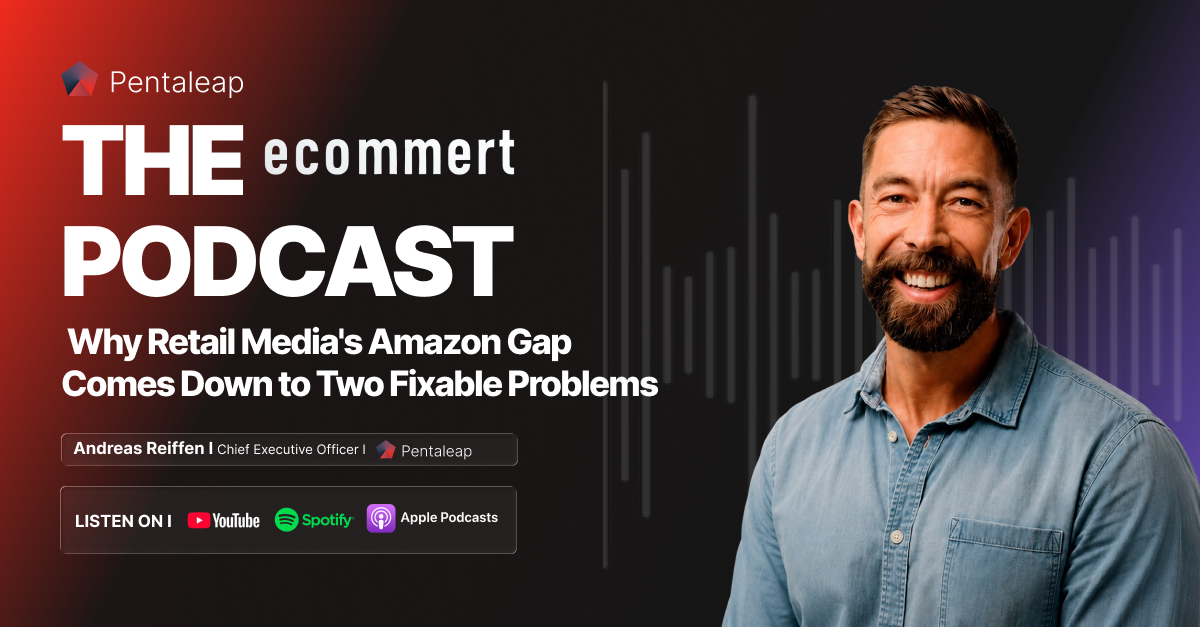
Notes from the eCommerce Podcast, with host Mert Damlapinar
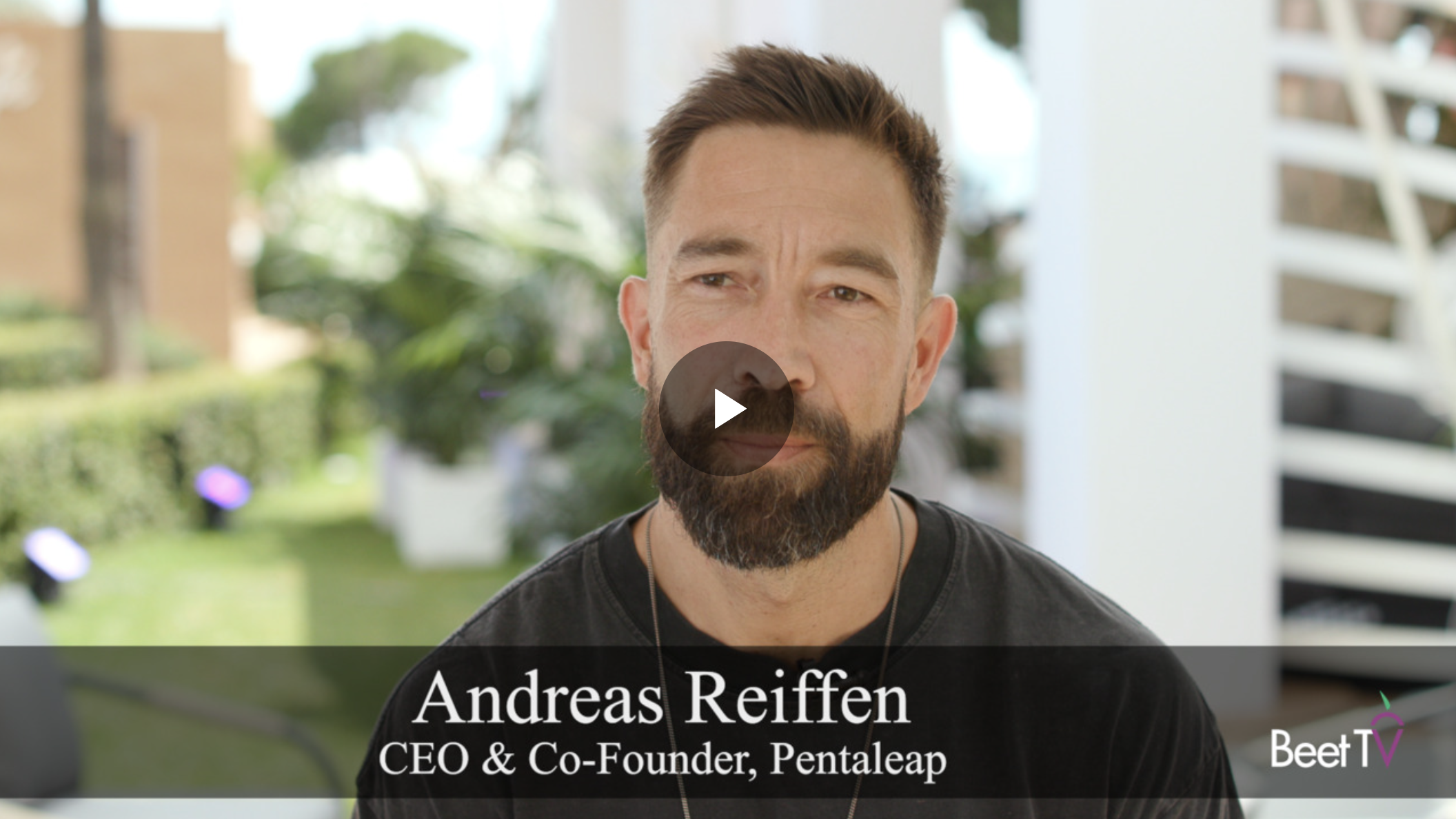
Recorded at Pentaleap's Berlin headquarters, this episode of the eCommerce Podcast has host Mert Damlapinar sit down with Andreas Reiffen, Founder and CEO of Pentaleap, for a wide-ranging conversation covering the company's origin as a spin-off from Crealytics, why Amazon holds such an outsized share of retail media spend, and what Reiffen calls a "tragedy of the commons" playing out across the industry's growing number of retail media networks. The two also walk through three real deployment models Pentaleap runs with clients, why Reiffen is skeptical brands will ever get full measurement transparency handed to them, and how AI is already reshaping personalization and campaign management.
TL;DR: Amazon controls roughly 38% of US e-commerce but around 78% of US retail media spend, and Reiffen argues that gap comes down to two specific things Amazon got right: sponsored products relevant enough that users keep clicking, and an open API structure that lets multiple demand-side tools compete for the same inventory. Most other retailers copied Amazon's direct-sales model without replicating either of those two advantages, which Reiffen compares to a tragedy of the commons: every retailer protecting its own brand relationships individually, at the cost of the fragmentation-free scale a network approach could have delivered. His prescription is consistent across the conversation: fix ad-serving relevance first, then open up demand access, and own your measurement rather than waiting for retailers to hand you full transparency. Watch the full episode on YouTube.
From a Failed Programmatic Bet to a Rocket Ship Inside Crealytics
Reiffen traced Pentaleap's origin back roughly five years, to a moment when he noticed the same shift happening in Google Shopping was about to move into retail environments, right as Hook Logic entered the market. His original instinct was to build programmatic-style supply-side technology for retail media, essentially bringing the logic of the broader programmatic industry, where retailers could plug into a multitude of demand networks, into a category that at the time forced retailers to work with just one.
The timing was wrong. Several companies, including Google, showed real interest but ultimately didn't move forward, largely because the market itself was too early. Retail media at that stage was still just Hook Logic and Criteo, and the pressing problem wasn't optimization, it was getting the category off the ground at all. Reiffen and his team shelved the ambition and quietly built private-markets capability instead, inside Crealytics, until around eighteen months before this conversation, when the market caught up to the original idea. With Home Depot, several pharmacy chains in Brazil and Mexico, and Staples on the platform, the retail media business inside Crealytics started growing fast enough, and different enough in its investor logic, that spinning it out into its own entity made more sense than continuing to run it alongside Crealytics' mature performance marketing business.
Amazon's Real Advantage Isn't Size, It's Two Specific Things
Asked why Amazon dominates so heavily, Reiffen pointed to a gap between Amazon's share of e-commerce and its share of retail media spend. In the US, Amazon holds roughly 38% of e-commerce, but closer to 78% of retail media ad spend, a gap size alone can't explain.
Reiffen attributes that gap to two specific things Amazon got right. First, relevance: roughly 75% of Amazon's advertising revenue comes from sponsored products alone, which only works because Amazon manages to show sponsored products broadly without users abandoning the platform. Get relevance wrong, and low click-through rates make it impossible to expand ad inventory without damaging the shopping experience. Second, openness: rather than keeping demand access locked to a single sales channel, Amazon built its supply-side technology to let multiple third-party campaign management tools, and even agencies building their own tools, connect through its APIs. That combination, being genuinely relevant and genuinely open to multiple demand sources, is what most other retailers haven't replicated.
The Tragedy of the Commons in Retail Media
Damlapinar raised a natural follow-up: with so many retailers now launching their own retail media networks, is that proliferation solving the fragmentation problem, or making it worse? Reiffen reached for an economics concept, the tragedy of the commons, where individually rational decisions by every actor add up to a worse outcome for everyone.
His read on how the industry got here: retail media originally worked as a network model, where a brand's budget could target a broad set of retailer websites at once. Once Amazon proved a direct-sales, private-markets model could work at scale, most other retailers copied it, largely out of a desire to protect their own brand relationships rather than share a common demand pool with competitors. The result, from a brand's perspective, is a fragmented mess: managing separate relationships across dozens of smaller retailers, each offering a fraction of Amazon's scale, often makes less sense than simply concentrating spend on Amazon and getting that relationship right. Reiffen's expectation is that this gradually reverses, with private, direct-sales relationships slowly giving ground to network-style, programmatic demand as retailers build the ecosystem for it.
"Retail Media Tech You Don't Hate"
Asked about Pentaleap's own positioning, "open, transparent, and kind," Reiffen connected it directly to the frustration he hears from nearly every prospect and new client: on-site user experience fights, ads that feel intrusive, and a sense of being locked into one ecosystem with no real choice in partners. Because Pentaleap doesn't compete for the parts of the business it doesn't need to own, Reiffen described the company's product as one that can add value working alongside other tools, or cover the full range of retail media use cases on its own, depending on what a given retailer actually needs stitched together.
Three Ways Retailers Actually Deploy Pentaleap
Reiffen walked through three concrete use cases that illustrate how differently retailers apply the same underlying technology.
Home Depot uses Pentaleap's full supply-side stack, its ad server, SSP component, and APIs, to deliver stronger ad-serving relevance and expanded inventory. Because Home Depot also manages in-store, offsite, and email channels, they built a unified front end on top of Pentaleap's APIs so advertisers interact with a single interface rather than a separate tool for on-site alone.
A large incumbent sponsored-products network (unnamed in the conversation) uses Pentaleap purely on the ad-serving side, fetching bids and products in real time from that existing network and rendering the actual product pages. Reiffen reported this specific deployment produced a 90% increase driven by improved click-through rates, along with twice as many paid clicks for the network's advertisers, without requiring any change to the underlying demand relationships.
Staples represents the most complete deployment: Pentaleap's supply-side ad serving and SSP, connected demand from a leading incumbent sponsored-products network, plus Pentaleap's own private-markets campaign manager. Staples' team manages its largest brand relationships directly, while Pentaleap's team supports ad operations and sales for the long tail of smaller advertisers, all running through the same campaign management tool.
The 5X Behind Pentaleap's Name
Asked how CPG brands specifically benefit, Reiffen returned to Staples, the client that gave Pentaleap its name. When Staples switched its ad-serving technology to Pentaleap's platform, brands saw an immediate 5x improvement in return on ad spend, driven by two compounding effects: click-through rates roughly tripling, which cut effective cost-per-click to about a third of its previous level for the same click volume, and Staples subsequently expanding sponsored product inventory once the team saw it performing as well as organic placements. For deployments like Home Depot, where Pentaleap's impact on a brand's ROAS is less direct, Reiffen expects the same underlying mechanism to apply: filtering out sponsored products unlikely to convert and letting higher-converting ones rank higher produces a more effective mechanism for turning ad spend into actual sales.
Why Reiffen Doesn't Expect Retailers to Volunteer Full Transparency
On measurement, Reiffen drew a direct parallel to his earlier career working with large advertisers on Google Ads and paid social at Crealytics. He recalled analyzing retargeting campaigns around 2016 and finding bids of $10 to $12 going toward users who were already highly likely to convert, meaning advertisers were effectively paying premium prices to reach people who would have bought anyway. When his team offered to help advertisers measure this more accurately and adjust budgets accordingly, interest was minimal, because for a team managing a large annual budget, discovering the true return is a fraction of what was reported creates an uncomfortable conversation with leadership, not an opportunity.
Reiffen expects the same dynamic in retail media: incrementality will become a common talking point, and retailers will offer incremental steps toward transparency, but he doesn't expect anyone to fully solve the problem voluntarily, since selling inventory at the most flattering reported return is the retailer's basic incentive as a publisher. His conclusion is direct: brands need to own their own measurement rather than waiting for it to be handed to them.
His three practical recommendations for brands managing retail media spend across multiple channels: build internal measurement capability rather than relying on third parties or the retailer's own reporting; be genuinely willing to act on results that look worse than expected, including pulling spend from channels to test whether it's actually driving incremental sales; and maintain the relationship side of the business without letting it substitute for real evidence of performance.
Where AI Is Already Changing Retail Media, and Where It Isn't Yet
Reiffen pointed to on-site personalization as an area already shaped by high-end AI, comparable to how platforms like TikTok personalize content feeds. His core critique of the category, though, is that most retail media platforms build personalization for organic products separately from how they handle sponsored ones, treating the ad layer as an afterthought bolted onto an already-intelligent organic ranking system. His view is that both need to run through one unified algorithm that accounts for the entirety of e-commerce data, with sponsored bids acting as one input into that ranking rather than a separate, siloed decision.
On offsite retargeting specifically, Reiffen was more skeptical, particularly in a European context, where he expects consumer resistance to having personal data leveraged outside a retailer's own site to limit how far this tactic can realistically go. He was more optimistic about automated campaign tools like Google's PMax, which lets advertisers manage a product feed across search, Shopping, text ads, and YouTube without the granular, channel-by-channel management required a decade ago. Reiffen noted Pentaleap already routes some client budgets through PMax via Staples, while being clear that automation on the demand-generation and creative side does nothing to solve the measurement transparency problem discussed earlier.
Building an Employee-Owned Team Around a Shared Mission
Asked how he keeps the Pentaleap team motivated, Reiffen described a deliberate structural choice made when the retail media business was spun out of Crealytics: prioritizing people willing to convert 20-40% of their prior salary into equity, making Pentaleap effectively an employee-owned company. His view is that motivation comes less from leadership rallying speeches and more from the team directly seeing how the product resonates with clients, staying close to sales conversations, and sharing in a mission he frames as reducing friction across the retail media ecosystem broadly, since Pentaleap's real competitive reference point isn't other retail media vendors, it's closing the gap with Amazon.
FAQ
Why does Amazon control such a disproportionate share of retail media spend? Amazon holds roughly 38% of US e-commerce but around 78% of US retail media ad spend. Reiffen attributes the gap to two specific factors: sponsored products relevant enough that expanding ad inventory doesn't damage the shopping experience, and an open API structure that lets multiple third-party demand and campaign management tools compete for the same inventory, rather than routing everything through one exclusive sales channel.
Why did so many retailers copy Amazon's direct-sales model instead of an ad network approach? Retailers wanted to protect their own brand relationships rather than share a common demand pool with competitors. Reiffen compares the resulting fragmentation to a tragedy of the commons: individually reasonable decisions by each retailer that collectively make it harder for brands to spend efficiently across the category.
Will retail media measurement ever become fully transparent? Reiffen is skeptical it will happen voluntarily. Drawing on his earlier experience analyzing retargeting performance in paid search, he argues that publishers, including retail media networks, have a structural incentive to report the most favorable version of performance. His recommendation is that brands build independent, in-house measurement capability rather than waiting for retailers to provide full transparency on their own.
How does Pentaleap typically work with a retailer? Deployment models vary. Some retailers use Pentaleap's full supply-side stack, ad serving, SSP, and APIs, and build their own front end on top, as Home Depot did. Others use Pentaleap purely to improve ad serving on top of an existing sponsored-products network they already work with. Some, like Staples, combine Pentaleap's ad serving with its own private-markets campaign management tool alongside an existing incumbent network.
This post is based on a conversation between Mert Damlapinar of the eCommerce Podcast and Andreas Reiffen, Founder and CEO of Pentaleap, recorded at Pentaleap's headquarters in Berlin. Watch the full episode on YouTube
Stay Ahead with Retail Radar
Subscribe for cutting-edge insight into the latest retail media developments and trends
.png)

.webp)