.svg)


Why Retail Media's Next Unlock Is Connecting Merchandising and Media, Not Adding More Channels

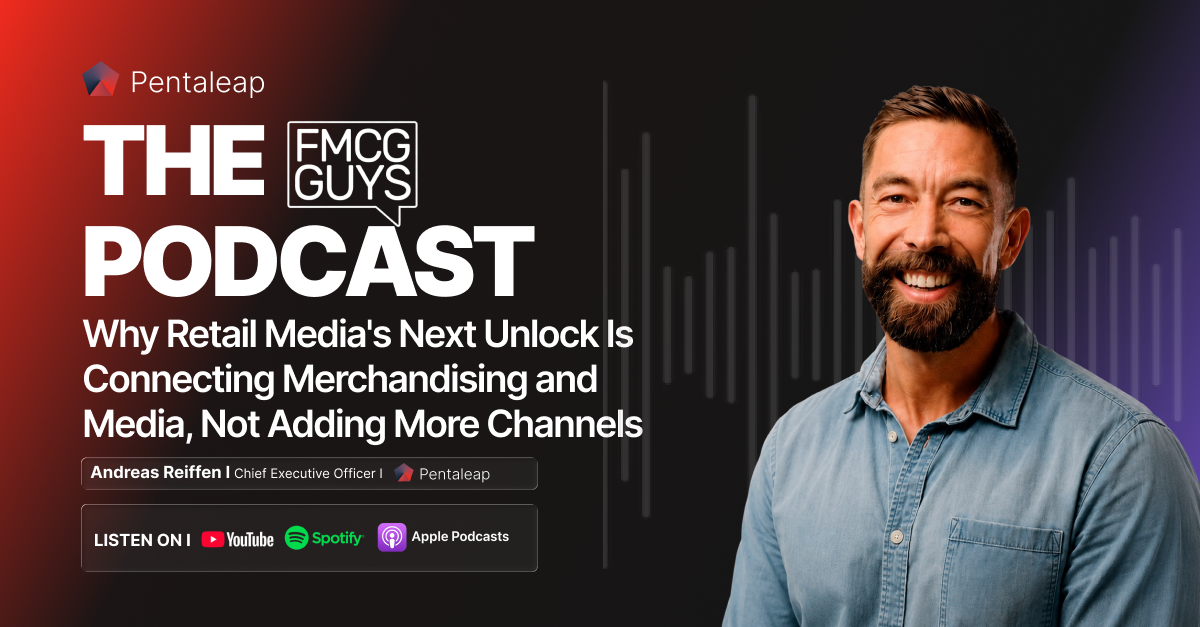
Notes from The FMCG Guys podcast, with host Daniel Torres.
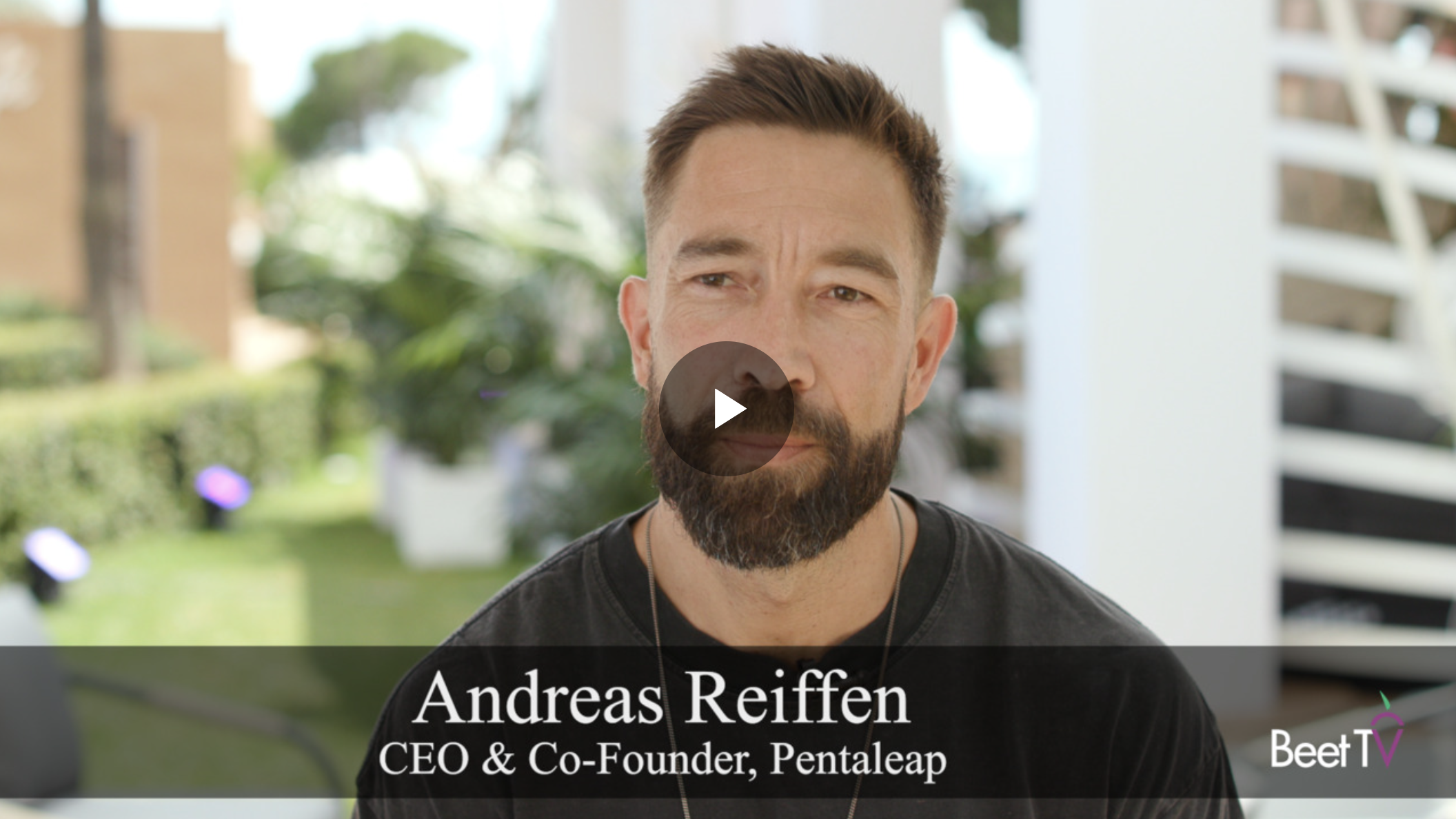
On this episode of The FMCG Guys, host Daniel Torres sits down with two people who, on paper, look like competitors: Andreas Reiffen, Founder and CEO of Pentaleap, and Troy Townsend, CEO of Zitcha. Reiffen has been a returning guest on the show and has spent years building the ad serving and unified ranking layer beneath some of the world's largest retail media networks. Townsend, recently relocated from Australia to the US, leads Zitcha, known for orchestrating campaigns across on-site, off-site, and in-store channels with a margin-first lens. Ahead of Cannes, the two joined Torres to explain why they partnered, what problem retail media still hasn't solved, and why the real opportunity isn't another channel, it's getting merchandising and media to finally speak the same language.
TL;DR: Pentaleap and Zitcha look like they compete for the same budget, but they solve two different problems. Pentaleap unifies organic and sponsored ranking on-site. Zitcha orchestrates campaigns and demand across every other channel, with a focus on margin. Reiffen and Townsend walk through why retail media has been fragmented on two levels, across networks and within a single retailer's own stack, and why the next stage of the category isn't about adding more channels. It's about connecting the merchandising side of the business with the media side, so every dollar of margin, retail or advertising, gets treated with the same discipline. Watch the full episode on YouTube.
Two Companies That Look Like Competitors, and Aren't
Reiffen opened by naming the confusion directly: from the outside, it's genuinely hard to tell who does what in retail media technology, and buyers are often just as confused as anyone watching from the sidelines. Pentaleap and Zitcha operate in the same broader category and share a similar belief, that retail and retail media should grow together, but the actual work is different.
Pentaleap focuses on the product grid itself: unifying organic and sponsored ranking so the products shown on-site reflect true relevance and margin. Zitcha focuses on orchestration, giving retailers one place to plan, launch, and manage campaigns across on-site, off-site, and in-store, with an eye on the margin those campaigns generate. Townsend put it simply: the two companies arrived at the same broader problem from different starting points, one from ad serving, one from omnichannel coordination, and the paths converged rather than collided.
Fragmentation Has Two Layers, Not One
Reiffen traced the industry's evolution from an early ad-network model (Hook Logic) to the wave of retailers copying Amazon's direct-sales playbook. As more retail media networks launched, fragmentation became the defining problem, but Reiffen was clear that it shows up in two separate places.
The first layer is fragmentation across retail media networks. A brand working with a dozen or more retailers has to negotiate, report, and manage each relationship separately. The second layer, less discussed but just as costly, is fragmentation inside a single retailer's own walled garden: one person selling on-site placements, another selling video, another selling email, none of it coordinated.
Pentaleap addresses the first layer by building connections to major ad tech platforms, so brands can reach a retailer's inventory through demand sources they already use. Zitcha addresses the second layer by giving retailers a single view to plan and sell across every channel inside their own ecosystem, without that internal fragmentation. Reiffen noted that when you step back, both problems are really one problem: a retailer runs a single business, and every dollar, whether it comes from selling a product or running an ad, should be evaluated against the same standard of margin.
The Real Bias in Retail Media: Mental Accounting
One of the more pointed observations in the conversation came from behavioral economics. Reiffen described how retailers apply real sophistication to their own advertising budgets, tracking predicted margin, customer lifetime value, and return with real rigor, because it's their own money. Retail media budgets, by contrast, often arrive to a retailer as something closer to a gift from the brand, and that changes how carefully it gets managed.
The result is a gap: money treated with discipline on one side of the business, and money treated more loosely on the other, even though it's the same currency. Closing that gap, Reiffen argued, requires media and merchandising teams to start working from the same playbook rather than operating as separate functions with separate incentives. Townsend agreed, adding that sales velocity and sell-through, core retail metrics, deserve as much weight in a retail media conversation as return on ad spend does. Media and merchandising, in his words, need to start speaking a similar language.
Why Smaller Retailers Struggle to Access Real Media Budgets
Townsend raised a dynamic that rarely gets discussed on stage at industry events: large retailers are genuinely accessing incremental media dollars, while many mid-size and smaller retailers are still largely repackaging trade budget under a retail media label.
Reiffen's explanation ties back to scale and sales infrastructure. Brands don't yet see smaller retailers as a distinct media channel worth a dedicated budget line, and those retailers often lack the sales structure to pursue media dollars directly the way a Walmart or Target can. This is where the partnership's logic holds together: reaching brands' media budgets through connected ad tech platforms gives smaller and mid-size retailers a path to incremental demand without needing to build a full sales organization from scratch, while Zitcha helps retailers run their direct relationships with the brands that matter most as efficiently as possible.
A Partnership Built to Avoid Conflict, Not Create One
A natural question for any retailer considering both tools: does working with two vendors instead of one cost more, or create friction? Reiffen and Townsend were direct that the model was built specifically to avoid both problems.
Most Pentaleap customers never touch a brand-facing interface at all. Pentaleap operates as the layer that delivers unified ranking underneath whichever ad servers or front ends a retailer already runs, while Zitcha provides the workflow, orchestration, and brand-facing experience. Because Pentaleap doesn't compete for that layer of the business, and doesn't take a share of the media budgets Zitcha helps manage, there's no structural incentive for either side to hold back value from the other. Reiffen described it as being able to tell a shared customer, plainly, that adding the other's capability doesn't cost them anything on the Pentaleap side, because there's nothing to lose by recommending it.
The Measurable Case for Unifying Ranking
Asked how this partnership actually improves a retailer's business, Reiffen pointed to three concrete levers. A single, unified front end makes it easier for brands to spend across every channel, which naturally encourages more budget to flow in. Unifying organic and sponsored ranking on-site has produced ad revenue increases in the 80-130% range across Pentaleap's tests, driven by click-through rates roughly doubling and conversion rates sometimes tripling. And beyond those two, retailers gain access to incremental media budgets they simply couldn't reach on their own, budgets that were previously locked inside brands' broader marketing spend rather than earmarked specifically for retail media.
AI Agents: A New Channel, Not the End of the Website
The conversation closed on agentic commerce, and both Reiffen and Townsend pushed back on the idea that AI shopping assistants pose an existential threat to retail media specifically. Reiffen's view: the technology is disruptive enough that it could reshape retail as a whole, but the near-term impact on retail media is overstated. As long as the transaction still happens on a retailer's own website, that website still needs a reason for people to keep visiting it, and someone still needs to drive that traffic there.
Reiffen also referenced an internal analysis Pentaleap ran years earlier that undercuts a common assumption: that a shopper who searches for a specific product will click through and buy exactly that product with no further browsing. The data showed the opposite. Shoppers frequently land on a product page for the item they searched for, then continue navigating the site and end up purchasing something else entirely. That behavior, Reiffen argued, is a strong signal that the broader shopping journey on a retailer's own site isn't going away anytime soon.
Townsend widened the lens further, pointing to the upstream opportunity in agentic commerce, deeper product catalog structuring, more dynamic pricing and content, and entirely new surfaces like wearables, as the areas retailers and their technology partners should actually be focused on, rather than treating AI purely as a threat to sponsored product margin.
FAQ
Are Pentaleap and Zitcha competitors? Not in practice. Pentaleap unifies organic and sponsored product ranking on a retailer's own site. Zitcha orchestrates campaigns and demand across on-site, off-site, and in-store channels with a focus on margin. The two companies solve different layers of the same problem rather than competing for the same budget.
Why does retail media suffer from so much fragmentation? It shows up on two levels. Brands managing relationships with a dozen or more retail media networks face fragmentation across the industry. Inside a single retailer's own walled garden, fragmentation often exists too, with on-site, video, and email sold and managed as separate, uncoordinated channels.
Does working with two vendors instead of one cost a retailer more? The partnership was structured specifically to avoid that. Most Pentaleap customers never interact with a brand-facing interface at all; Pentaleap delivers unified ranking underneath, while Zitcha owns the orchestration layer. Neither company takes a share of the other's business, so there's no financial incentive on either side to hold back value.
Should retailers be worried about AI agents replacing retail media? Not based on what the data shows so far. As long as transactions and browsing still happen on a retailer's own site, retail media doesn't disappear, it becomes another channel to plan for. Pentaleap's own analysis found that shoppers frequently continue browsing a site well beyond the specific product they originally searched for, which suggests the broader on-site shopping journey isn't going away.
This post is based on a conversation between Daniel Torres of The FMCG Guys, Troy Townsend of Zitcha, and Andreas Reiffen of Pentaleap. Watch the full episode on YouTube.
Stay Ahead with Retail Radar
Subscribe for cutting-edge insight into the latest retail media developments and trends
.png)

.webp)