Can Display and Video Be Ranked by Relevance, or Is That Only for Sponsored Products?


A sponsored product that misses the shopper's intent still looks like a product. A banner that misses looks like an ad, sitting in the middle of a grid your merchandising team spent months tuning. Picture a video ad for outdoor speakers autoplaying above a search for earplugs.
That's why display needs relevance ranking more than sponsored products do, not less. It's the format most likely to read as clutter, so it's the format that most needs to earn its place. In Pentaleap, banner and video creative run through the same relevance engine as sponsored products: approved once, then shown wherever it's contextually relevant, ranked against the same organic results as everything else on the page.
TL;DR
- Yes. Display and video can be ranked by relevance. In Pentaleap, banner and video creative run through the same Fluid relevance engine as sponsored products.
- Display is the format most likely to feel like clutter because it takes more space, breaks the visual rhythm of the grid and looks unmistakably like advertising. A badly matched banner costs more attention than a badly matched sponsored product.
- Relevance-ranked display is approved once and shown wherever it's contextually relevant, instead of being booked to a fixed page and shown regardless of what the shopper searched for.
- It runs on inventory you already have, with no separate ad-serving system to integrate for display.
- Pentaleap's published lift figures come from sponsored products. For display and video, measure the result in your own A/B test before scaling.
"Sponsored products are cluttering our site, and shoppers don't find them relevant." Why does display make that worse?
Display makes it worse because every weakness of bid-only ranking gets bigger when the ad gets bigger. A sponsored product occupies one tile and looks like the products around it. A banner or a video takes more of the screen, interrupts the grid and is obviously an ad. When it's well matched to the search, shoppers treat it like useful information. When it isn't, there's no hiding it.
If display on your site is limited to a few fixed placements on high-traffic pages, that caution is reasonable. When sponsored products and display are ranked by bids instead of relevance, every additional ad slot risks pushing shoppers away, and media growth starts to eat into ecommerce revenue instead of adding to it. We've looked at how to tell whether sponsored revenue is growing or just getting more dense, and the same test applies to display.
The question worth asking isn't how many display placements your site can tolerate. It's whether the system placing them knows what the shopper is looking for.
How does display usually get onto a product grid?
In most setups, display is placed by its own system. Creative is booked against a page, a placement or a category, then served into that spot by a separate ad-serving system that runs in a silo, disconnected from what the retailer's own search and personalization already decided about the page.
That's the root of the clutter problem. The search engine knows the shopper typed "earplugs." The display system knows a brand booked the electronics category for the week. Neither checks with the other before the page loads, so the banner shows up whether or not it fits.
It also means a second system to integrate, configure and maintain, separate from the one running sponsored products, often with its own reporting.
What does it mean to rank a banner or a video by relevance?
It means display competes for its place using the same relevance logic that already decides where organic and sponsored products appear. In Pentaleap, banner and video creative go through the same Fluid relevance engine as sponsored products. A piece of creative is approved once. From then on, it's shown wherever it's contextually relevant to what the shopper is doing, rather than everywhere it was booked.
That relevance logic is the one your existing search AI already provides. Pentaleap connects to the system you already run, whether that's Algolia, Google Vertex AI, Bloomreach or your own stack, and uses the signals it already has. No new model gets trained. So when a banner appears in a search result, it's there for the same kind of reason the products around it are there.
Placements aren't tied to fixed page types either. Search, category, product detail pages, the homepage and conversational AI surfaces are all just placements, using the same relevance logic. If your team is working out how to put ads inside an AI shopping assistant, we've covered how to monetize an onsite AI assistant without breaking it.
Does ranking display by relevance mean showing shoppers more of it?
Not necessarily. The starting point is the ads you already show. Pentaleap re-ranks them, and the initial gain comes from relevance, not volume. If you later decide to add more display or sponsored products, that's a choice you make once you've seen the performance, not something the setup requires.
When ads do take grid slots, Pentaleap applies a relevance threshold: an ad only takes a slot if it's expected to perform at least as well as the organic result it replaces. That's the line that keeps "more formats" from turning into "more ads for the sake of more ads."
What does the merchandising team give up?
Less than it fears. The concern from merchandising is fair: display has historically been the format that overrides the page they built. Relevance ranking changes the starting rules, and the controls stay with the retailer.
Your team still decides what's eligible, who can bid and where ads appear. In Publisher Manager, floor price, tile inventory and bid impact (how far a bid can move a position, from fully relevance-led to fully bid-led) can be set per ad unit and overridden for specific categories. Fixed positions can be excluded from sponsorship entirely, so tiles your merchandisers want to keep organic stay organic. If your merchandising team's first question is whether the ranking change overrides the rules they already run, we've answered whether unified ranking overrides merchandising rules separately.
The bigger shift is that display stops being the merchandising team's opponent. When a banner only appears where it fits the search, it starts behaving like part of the assortment instead of an interruption to it.
What results should you expect from relevance-ranked display?
The lift figures Pentaleap publishes come from fixing sponsored product ranking. Retailers running Pentaleap alongside a legacy ad server have seen a 101% increase in ad revenue, 152% more click-through and 35% higher conversion once that ranking is fixed (Pentaleap internal data, H1 2026). There is no published display-specific equivalent, and display shouldn't borrow those numbers.
So measure it yourself. The same A/B test approach that proves a ranking change for sponsored products can run alongside your existing stack, measured by your own team using a Welch's T-test, a standard method for comparing two groups that accounts for differences in traffic and variance between them. Ask for display and video results to be reported separately from sponsored products, so you know what each format is actually doing. Here's how testing a ranking change on a slice of traffic works.
If a vendor hands you a display lift number without telling you how it was measured, that's your cue to ask.
Three questions to ask any vendor about display and video
- "Does display run through the same ranking decision as sponsored and organic products, or through a separate system?" A separate system means two ranking decisions on one page, and the clutter problem comes back.
- "Is creative approved once and placed by relevance, or booked to fixed pages and shown regardless of the search?" The answer tells you whether a banner will ever be suppressed when it doesn't fit.
- "Can you report display and video results separately from sponsored products, in a test measured by our team?" Blended results can hide a format that's underperforming.
What's the commercial case for ranking display by relevance?
Display ranked by relevance is another monetizable format on inventory you already have, with no separate ad-serving system to integrate. Sponsored products, display and video can run on your own grid, from brands you approve, looking exactly like the ads you run today.
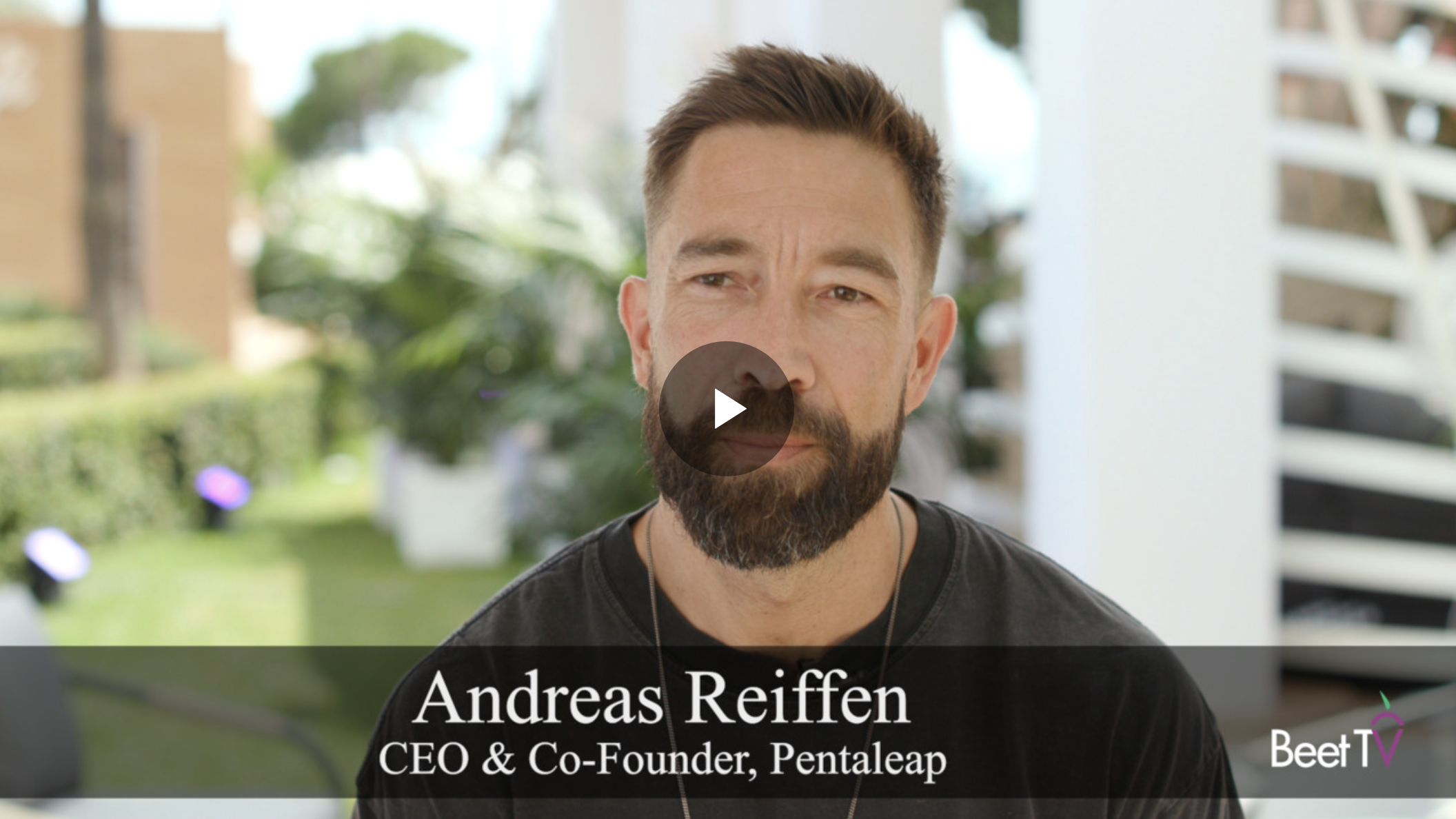
That opens a second door for revenue. Brands' media teams buy through the tools they already know, and Pentaleap connects your inventory to those sources so that budget can reach your shelf. We cover that side in more depth on the demand expansion page. Pentaleap's partnership with Zitcha also extends the same ranking logic to display and video supplied through Zitcha, which Andreas Reiffen discussed in his Cannes Lions 2026 conversation on cutting through the AI noise.
The decision this leaves you with is simple to state. If display on your site is placed by a system that can't see the search, it will keep reading as clutter however good the creative is. Put display through the same ranking decision as everything else on the page, then test what it earns on your own traffic before you add a single new placement.
Key Takeaways
- Display and video can be ranked by relevance. In Pentaleap, banner and video creative run through the same Fluid relevance engine as sponsored products.
- Display needs a relevance gate more than sponsored products do, because a mismatched banner takes more space and is more obviously an ad.
- Relevance-ranked creative is approved once and shown wherever it's contextually relevant, across search, category, product detail pages, the homepage and AI assistant surfaces.
- Ranking display by relevance doesn't require showing more ads. The initial gain comes from re-ranking what you already show.
- Merchandising controls stay with the retailer: eligibility, floor prices, tile inventory, bid impact and tiles excluded from sponsorship.
- Pentaleap's published lift figures (101% ad revenue, 152% click-through, 35% conversion, Pentaleap internal data, H1 2026) come from sponsored products. Measure display and video separately in your own test.
Frequently Asked Questions
Can display and video be ranked by relevance, or is that only for sponsored products?
Display and video can be ranked by relevance. In Pentaleap, banner and video creative run through the same Fluid relevance engine as sponsored products, are approved once, and are shown wherever they're contextually relevant.
Do we need a separate ad server for display and video?
No. Display and video run through the same relevance engine as sponsored products, on inventory you already have, with no separate ad-serving system to integrate.
Does adding Pentaleap mean showing shoppers more ads?
Not necessarily. Pentaleap re-ranks the ads you already show today. The initial lift comes from relevance, not volume. You may choose to add more sponsored products or display later, when you see performance gains.
Won't more ads just mean more clutter, or come at the expense of ecommerce revenue?
No. A relevance threshold holds the line: an ad only takes a slot if it's expected to perform at least as well as the organic result it replaces. That keeps additional formats from turning into more ads for the sake of more ads.
Where can relevance-ranked display appear?
Ad units aren't tied to fixed page types. Search, category, product detail pages, the homepage and conversational AI assistant surfaces are all placements that use the same relevance logic.
What revenue lift does relevance-ranked display produce?
Pentaleap's published lift figures come from sponsored products, so there is no display-specific number to quote. The right way to find out is an A/B test alongside your existing stack, with display and video results reported separately and measured by your own team.
Stay Ahead with Retail Radar
Subscribe for cutting-edge insight into the latest retail media developments and trends