.svg)


A Guide: The Future of Retail Media (Through the Lens of Pentaleap's CEO)

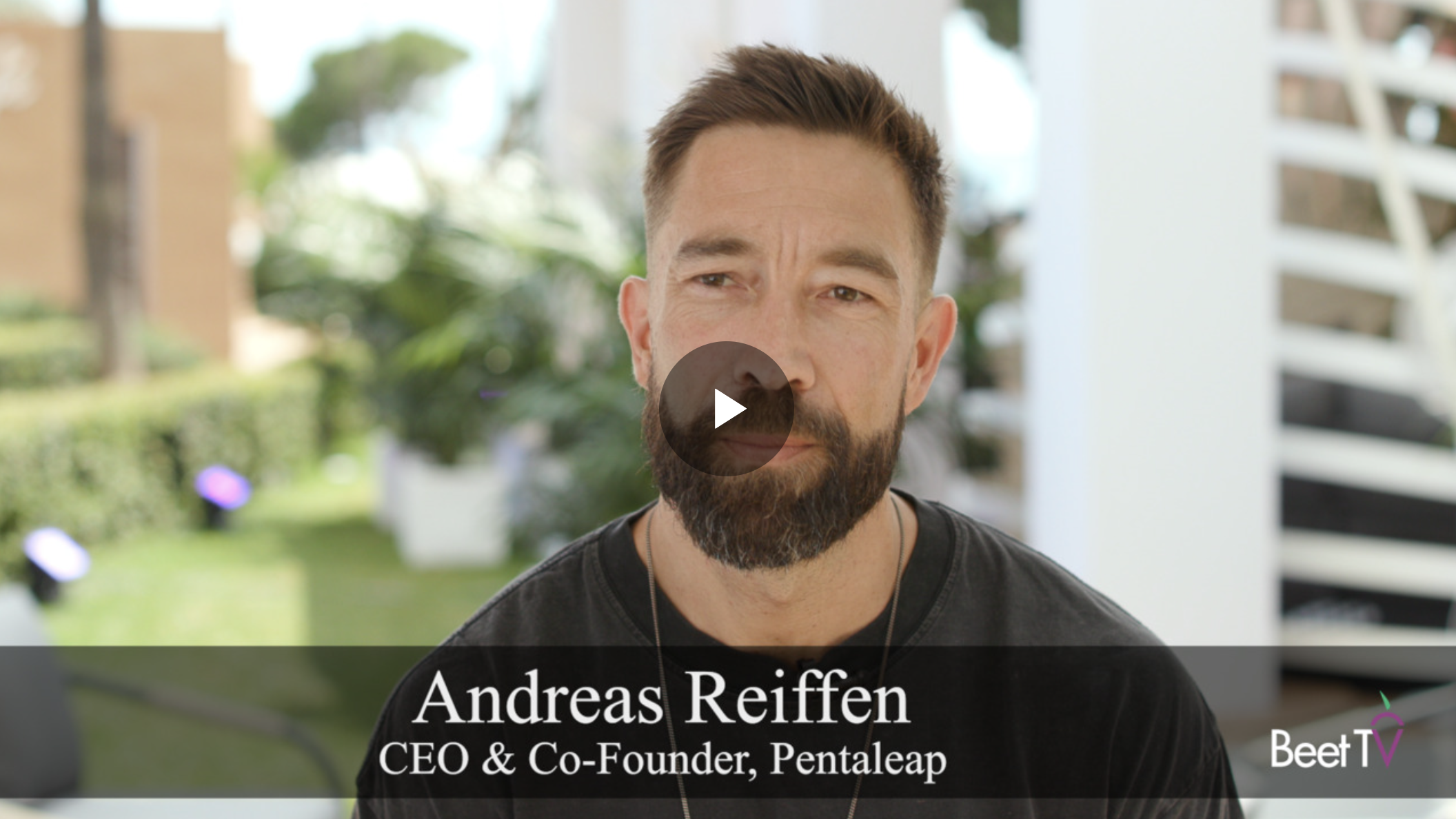
Between May and June 2026, our CEO, Andreas Reiffen, published five articles on Pentaleap's blog: onsite programmatic demand, AI shopping assistants, where retail media AI actually comes from, why "unified ranking" is suddenly everywhere, and how to build a network across onsite, offsite, and in-store without giving away the one thing that's actually yours: the shelf.
Read separately, these look like five different topics. Read together, they add up to one argument, discussed from five angles:
1. Unified ranking is now an industry consensus, but where that decision lives in your stack is the real architectural question.
2. Retailers shouldn't pay a vendor to rebuild AI capabilities their own search and personalization stack already has.
3. Whatever vendors you stitch together, owning your digital shelf outright is non-negotiable.
4. The same build-vs-reuse architecture question now applies to AI shopping assistants.
5. Onsite programmatic demand is live, and connecting to it doesn't mean losing control of your site.
TL;DR:
Retail media's next phase comes down to one architectural choice: whether the ranking decision, the AI, and the digital shelf itself stay independent and retailer-owned, or get bundled into whichever vendor sells the loudest pitch. This post connects the throughline across all five articles, with links to each in full below.
1. Unified Ranking Is Now the Standard, But Where It Lives in Your Stack Is the Real Decision
In "Criteo, Koddi & Others Are Championing a New Model," Reiffen names the convergence directly rather than claiming credit alone. Criteo, through President of Retail Media Sherry Smith on The CPC View podcast with Don Brett, calls its version "Holistic Page Optimization." Koddi pitches "unified decisioning." Constructor says it unifies organic and sponsored rankings to "optimize for revenue and relevance across both surfaces simultaneously." Particular Audience describes a single ranking system spanning search, personalization, and sponsored decisioning. Pentaleap has run this in production for five years with The Home Depot, CVS, and Macy's.
Reiffen's read: when the leading incumbent and multiple newcomers converge on the same idea independently, that's a new standard forming in real time, not a coincidence.
But he draws a distinction: not everything called "unified" clears the bar. Koddi's "unified decisioning" uses semantic search to improve which sponsored product gets selected, while still keeping sponsored and organic decisioning in two separate systems, a real improvement, Reiffen argues, just not unified ranking as he defines it: one system, one decision, weighing shopper intent, relevance, predicted performance, retail margin, and ad margin together.
Once a retailer accepts that premise, the same article, "Criteo, Koddi & Others," lays out three places that decision can actually sit, each with a real trade-off:
- Bundled inside the ad server is the easiest commercial fit if you're already committed long-term to that vendor's roadmap, but it limits your ability to add a second ad server or connect demand independently later.
- Inside the search and personalization layer keeps ranking logic close to the systems already shaping the shopper experience, which can reduce latency, but a future change of search provider now affects both ecommerce and media at once, not ecommerce alone.
- An independent layer, the route Pentaleap chose, sits between the ad server, search and personalization, demand partners, and orchestration tools, so any one of them can be swapped without rebuilding the architecture, at the honest cost of one more vendor in an already crowded stack.
"Criteo, Koddi & Others" also offers five questions for buyers to separate real unified ranking from a rebrand: how decisions are actually made, how third-party demand is integrated and priced, which campaign tools are supported and at what cost, whether a competing ad server can connect at all, and what happens if the search provider ever changes.
Reiffen backs the argument with real deployment data, not just the logic. A large fashion retailer and Pentaleap customer, under the old siloed model, generated less than half the click-through rate and converted at under 40% of the rate of adjacent organic products on the same page. After moving to unified ranking, four retailers saw e-commerce revenue and ad revenue move in the same direction at once: an EU pharmacy retailer up 105% and 97%; a US supercenter up 169% and 155%; a US health and beauty retailer up 148% and 90%; a US fashion retailer up 116% and 57%. In every case, conversion rate and click-through rate improved too, the pattern Reiffen points to as evidence the two sides of the business aren't trading off against each other.
2. Why Retailers Shouldn't Pay to Rebuild AI Their Stack Already Has
For retailers evaluating ad tech vendors, "Great Retail Media AI Is Getting Cheaper. Here's Why." makes the underlying economic argument explicit. Reiffen splits the market into two architectures: the traditional model, where Criteo, Koddi, and Moloco each build proprietary AI that optimizes ad revenue in isolation, and the unified model, which reuses a retailer's existing search and personalization infrastructure to optimize the full page across both revenue streams at once.
Reiffen's test for buyers: search "vegan protein bar" on a retailer running traditional ad tech. Whey-based products in the sponsored slots means the system lacks basic semantic understanding. Search "footwear" and find no shoes in the sponsored results despite active campaigns, and the query isn't connected to the inventory at all.
The deeper argument: semantic understanding, behavioral signal processing, prediction models, and real-time ranking aren't ad-specific problems, they're problems a retailer's search and personalization stack already has to solve. A vendor-owned ad AI running in a silo solves them again, independently, at full cost, usually with a narrower slice of the data. Macy's, running Google Vertex AI for Retail Search with Pentaleap's layer on top, is Reiffen's example of the alternative: no duplication, one page rendered from one set of signals.
The piece also makes a direct pricing claim: because Pentaleap operates without the margin pressure of a publicly listed company, the efficiency of reusing existing infrastructure gets passed to customers directly, meaning higher price no longer reliably signals better AI.
3. Own Your Digital Shelf, Whatever Else You Buy
"Building an RMN Across Onsite, Offsite & In-Store?" lays out three options for structuring the vendor stack.
Best-of-breed means picking the strongest vendor for each job separately. Costco is Reiffen's most transparent example: AVP of Retail Media Mark Williamson put the retailer's entire stack on stage at an NRF event in January, Criteo on the onsite ad server, Moloco on display, The Trade Desk, Google, Yahoo, Epsilon, and StackAdapt offsite, Habu for measurement. Williamson himself was candid about the cost: by his own account, it took longer, cost more, and was more complicated than it needed to be, though he still believes it was the right call for Costco.
All-in-one is the easier instinct, but it asks retailers to hand their product grid, the actual digital shelf, to an ad vendor. Reiffen points out that Google, Amazon, and Walmart have never let an ad vendor make that call on their own storefronts, and that Skai, despite managing billions in Google and Meta budgets, has never touched a page Google itself renders.
All-in-one with a fully owned shelf is the middle path Reiffen argues The Home Depot found first: one orchestration workspace on top (built with Vantage) for planning across onsite, offsite, and in-store, with Pentaleap underneath scoring sponsored products through the retailer's own relevance logic. He frames Pentaleap's partnership with Zitcha the same way: two technologies, one shared belief that retail and media need to grow together.
4. The Same Architecture Question Now Applies to AI Shopping Assistants
"Criteo vs. Pentaleap: Two Architectures to Monetizing AI Shopping Assistants" applies this framework to onsite AI assistants like Amazon's Rufus (recently renamed Alexa for Shopping) and Walmart's Sparky, not third-party chatbots like ChatGPT.
Reiffen's framing: the language model is the voice, reading shopper intent and forming a query. By its own makers' admission, it isn't good at deciding which products should win, since it lacks the ecommerce transaction data to make that call well. That decision sits in "the brain" underneath, where the two architectures diverge.
Architecture A (Criteo) builds a proprietary retrieval model trained on organic clicks, then a second proprietary model to re-rank the results. Architecture B (Pentaleap) uses the retailer's existing search and personalization engine to produce the ranked list, then adds only the piece that was missing: intelligently boosting products that carry advertiser bids. Macy's runs this exact setup.
Reiffen also names the two ways to monetize an assistant honestly. Selling prompts, suggested questions an advertiser buys like keywords, is real revenue and low risk, but not the larger opportunity. The bigger prize is refining the actual product recommendation itself, so a paid product only rises when it genuinely fits. His summary of the stakes: "A tilted recommendation isn't an ad. It's a lie."
5. Onsite Programmatic Demand Is Live, and It Doesn't Mean Losing Control
"Onsite Programmatic Demand Is Live" opens with Reiffen holding himself accountable to an earlier prediction: in December 2024, he argued real-time bidding would let Google, Amazon, and Criteo reshape retail media. His verdict two years later: right about the direction, too optimistic about the timing.
Three forces are converging: retailers are asking to plug into large platforms' demand rather than guarding against them, ad tech vendors including Criteo, Koddi, Kevel, and Pentaleap are building the connecting pipes, and a shared RTB standard is removing the custom integration cost that made this impractical before. Concrete examples from the past year: Criteo became Google's first onsite retail media supply partner inside Search Ads 360, and Macy's connected Amazon Retail Ad Service through Pentaleap.
He separates this from programmatic display's reputation: this is endemic, onsite inventory only, with the retailer still deciding eligibility and placement. The commercial case rests on a gap: Amazon's ad-revenue-to-ecommerce-revenue ratio runs above 13%, while most other retail media networks hit a ceiling between 1% and 3%. Part of that gap is structural, Amazon's scale isn't replicable inside a walled garden, but Reiffen argues a real portion is simply access: large platforms already sit inside the tools agencies and brand media buyers use every day.
His recommended sequence: keep strategic, high-relationship brands in direct sales; calculate an ad-revenue-to-ecommerce-revenue ratio for every other brand; flag low-ratio brands as candidates for demand partners; route each to whichever partner already holds that advertiser's relationship; and align internally on ownership before any programmatic bid competes with a brand a direct seller thought was theirs.
Key Takeaways
- The industry has converged on "unified ranking" as the new standard, with Criteo, Koddi, Constructor, and Particular Audience all pitching some version of it, roughly five years after Pentaleap put it into production with The Home Depot, Macy's, and CVS.
- Not everything marketed as "unified" actually is. True unified ranking means one system scoring organic and sponsored products together in a single decision, not two systems running in sequence and calling the result unified.
- The real decision for buyers is architectural, not cosmetic: does the ranking logic live bundled inside an ad server, inside the search and personalization layer, or in an independent layer that can sit on top of either.
- Rebuilding AI that already exists elsewhere in your stack is redundant by design. Semantic understanding, behavioral signals, prediction models, and real-time ranking are capabilities a retailer's search and personalization system already has to build; a vendor-owned ad AI running in a silo builds them again, at full cost.
- Owning the digital shelf is non-negotiable, whatever else you buy. Retail media is the one part of ecommerce where retailers routinely hand a third-party ad vendor control over what shoppers see on their own site, a boundary Google, Amazon, and Walmart have never crossed with their own storefronts.
- The same architectural question now applies to AI shopping assistants. Amazon's Rufus (recently renamed Alexa for Shopping) and Walmart's Sparky are real surfaces now, and the choice between a proprietary recommendation engine or reusing existing search and personalization AI is the same choice retailers face for their onsite grid.
- Onsite programmatic demand is live, not theoretical. Criteo became Google's first onsite retail media supply partner inside Search Ads 360, and Macy's connected Amazon Retail Ad Service through Pentaleap, concrete integrations shipped in the past year.
FAQ
Does bringing in outside demand through RTB mean a retailer loses control of its site? No. Onsite RTB only involves endemic inventory, the same products a retailer already sells, filtered through the retailer's own eligibility rules. RTB changes which budget source is funding a placement, not what can appear or who decides.
Why did Costco choose a best-of-breed stack if it was harder to run? AVP of Retail Media Mark Williamson has been candid that the approach took longer, cost more, and was more complicated than buying one bundled platform, but Costco judged that vendor partnerships got them to market faster with proven technology than building or fully committing to a single all-in-one vendor.
How can retailers actually monetize an AI shopping assistant? Reiffen names two paths: selling prompts (suggested questions an advertiser buys, similar to keywords) is the lower-risk, easier path, while embedding sponsored products directly into the recommendation itself, so a paid product only surfaces when it genuinely fits, is the harder but larger opportunity.
What should a retailer ask a vendor before buying into "unified ranking"? Five things: how the ranking decision is actually made, how third-party demand is integrated and priced, which campaign tools are supported and at what cost, whether a competing ad server can be connected at all, and what happens to the retail media business if the search provider ever changes.
Further Reading
Stay Ahead with Retail Radar
Subscribe for cutting-edge insight into the latest retail media developments and trends
.png)

.webp)