.svg)


Why Your Sponsored Products Are Underperforming on Your eCommerce Site


Most conversations about underperforming sponsored products start in the wrong place. A team looks at a flat or declining click-through rate and reaches for the levers closest at hand: refresh the creative, adjust the bids, maybe put the ad tech vendor on notice. Those levers rarely move the number, because CTR on sponsored products is usually not a creative or bidding problem. It is an ad tech problem, tied directly to how your ad server decides what a shopper sees.
CTR is upstream of almost everything else in an onsite retail media program. It affects fill rate, advertiser satisfaction, renewal conversations, and, as we will get into, the site's organic conversion rate too. Understanding why it underperforms, and what actually fixes it, is worth a few minutes before touching a single campaign setting.
TL;DR: After running a number of live A/B tests that compare a legacy, fixed ad server against unified ranking on the same inventory, Pentaleap has observed that sponsored products CTR on legacy, siloed setups regularly lags well behind what unified ranking produces on the same page. The fix does not require replacing your existing ad server or campaign UI. It requires unifying the ranking logic with an optimization layer.
The CTR Gap, and Why It's Hard to See Day to Day
Across retail media programs still running sponsored products through a legacy, siloed ad server, click-through rate on sponsored placements tends to underperform what the same inventory can produce once ranking is unified with organic search. That is Pentaleap's own finding from live testing against existing stacks, and the exact gap will vary by retailer, catalog, and category.
That gap compounds. A lower CTR on sponsored products does not just mean fewer ad clicks. It usually means the sponsored placement is displacing a more relevant organic result, which drags down conversion on the eCommerce page as a whole. Retailers end up paying an underperformance cost twice: once in wasted ad inventory, and once in organic sales lost to irrelevant placements.
This is the mechanism behind what we call the relevance tax. It is not a line item on anyone's P&L, but it shows up in every metric downstream of the product grid.
Why Sponsored Products Underperform: The Mechanism
Most retail media infrastructure was not built around relevance. It was built around ad serving.
Legacy approach to ad serving works like this:
- Sponsored products are pushed into fixed, predetermined slots on the page (tile 1, tile 4, tile 7).
- Placement decisions are driven primarily by bid and basic targeting rules.
- Organic ranking runs on a separate system, usually a search or personalization engine, that has no visibility into what the ad server is doing.
- The two systems never compare notes. A high bidder can win a slot even if their product has little to do with what the shopper searched for.
That last point is the core problem. When a sponsored product is not relevant to the query, shoppers scroll past it, or worse, it pushes a genuinely relevant organic result further down the page. Either way, CTR tends to suffer, and the shopper's experience gets a little worse.
Fluid (Dynamic), unified ranking works differently:
- Sponsored and organic products are scored against the same relevance model, typically powered by enterprise search AI already in use for the organic experience.
- Bid becomes one input into a single ranking decision, not the only input.
- A sponsored product only wins a prominent position if it is both competitively bid and genuinely relevant to the search or browse context.
The practical result is a grid where sponsored and organic results are ranked by the same logic, so a placement only wins its spot by being relevant, not just by bidding the highest.
That relevance requirement is what tends to drive the CTR difference between the two approaches. Relevant placements get clicked more. Irrelevant ones do not, regardless of how much was bid for them.
This mechanism is really a question of where the ranking logic lives in your stack, and there are more variations on it than a simple fixed-versus-fluid (dynamic) split. For a deeper look at the three ways retail media technology tends to get structured, see The Three Architectures: How Retail Media Tech Actually Works.
A Glimpse: What the H1 2026 Benchmarks Report Actually Shows
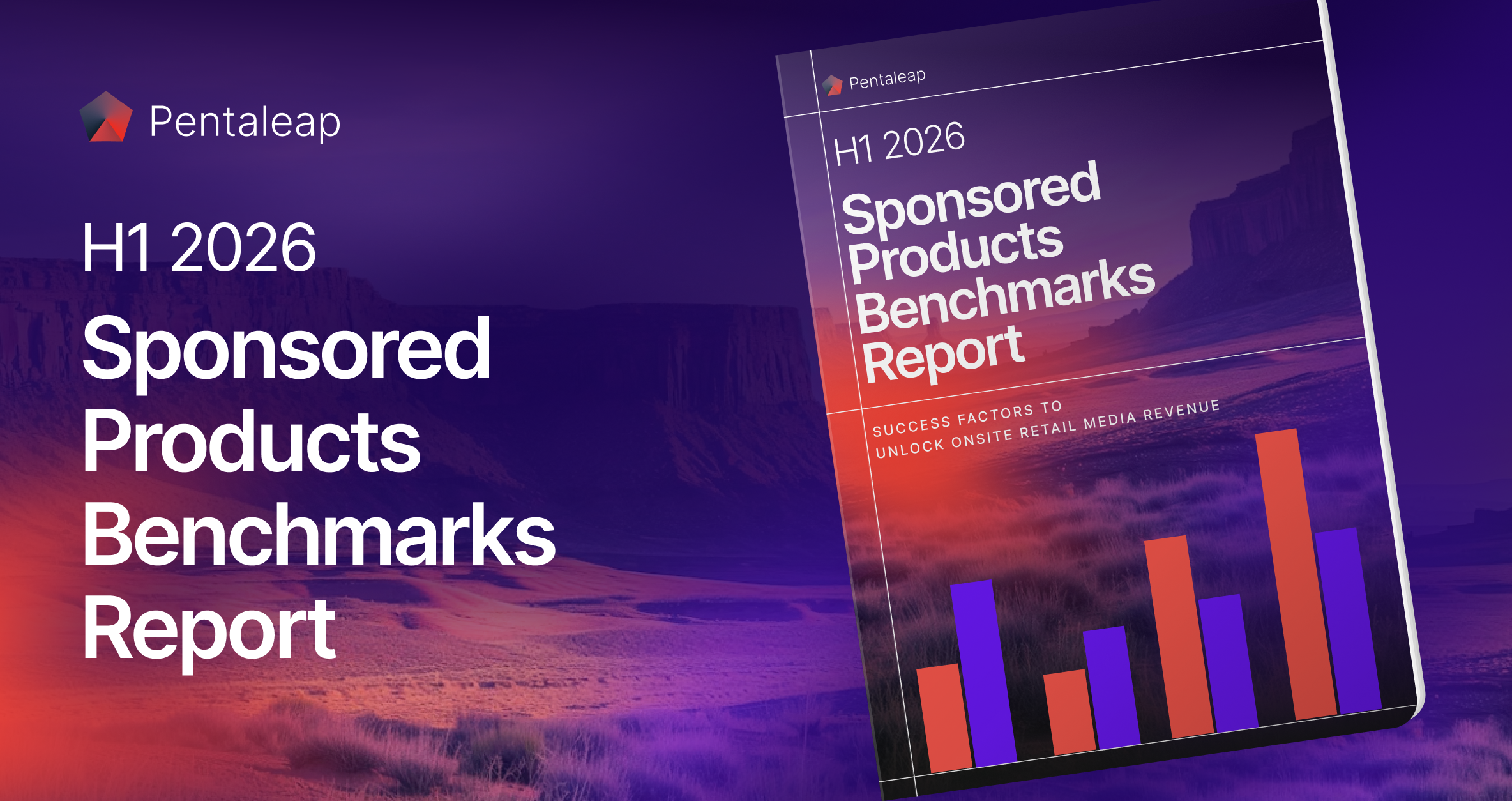
Pentaleap's H1 2026 Sponsored Products Benchmarks Report tracked ad coverage and grid position across 12 leading US retail media networks over the past year. It is worth being precise about what this can and cannot tell you: it documents publicly available data on ad placement patterns from the outside. It does not have access to retailer-side CTR, conversion, or targeting data, so it cannot tell you why a retailer's placement pattern changed, only that it did.
With that scope in mind, a few shifts from the report:
- The Home Depot shows a clear move away from fixed placements at positions 4 and 8, toward a more fluid (dynamic) ad grid, with ad coverage increasing at positions 2 and 3 instead.
- CVS now distributes ads more dynamically across the grid, with a slightly higher concentration in top positions compared to the year before.
- Macy's joined Amazon, Walmart, and The Home Depot in the 20-plus-ads-per-page group, growing ad load through a more distributed placement pattern rather than by stacking additional fixed slots.
These are documented changes in where ads appeared on the page. The report itself does not, and Pentaleap does not, claim these shifts were driven by relevance specifically, since that would require visibility into each retailer's internal ranking logic that an outside-in report cannot have.
See the full report.
What a Higher CTR Is Actually Worth
CTR is a leading indicator, not the finish line. A higher click-through rate on sponsored products only matters because of what it does downstream: more clicks at the same bid convert into more revenue, more advertiser satisfaction, and a stronger case for expanding ad load without hurting the shopper experience.
A/B tests comparing unified, fluid (dynamic) ranking against legacy, fixed ad serving have shown ad revenue increases between 80% and 140%, depending on the starting architecture and how much of the product grid is open to unified ranking.
Some of that lift comes from reduced cannibalization and increased auction density. For the full breakdown of where that range comes from and how to estimate it for your own program, see Unified Ranking vs. Reserved Tiles: The Ad Revenue Gap.
The Fix: Unify Ranking, Not Your Whole Stack
The instinct when CTR underperforms is often to look at creative, bidding strategy, or switching ad tech vendors entirely. Those levers matter less than they seem to, because none of them address the root cause: sponsored and organic products are being ranked by two systems that do not talk to each other.
The more durable fix is to unify the ranking layer, without disrupting the campaign UI, ad server, or frontend the team already knows how to use.
In practice, that looks like:
- Adding an optimization layer that sits between demand and the product grid, scoring sponsored and organic products against one relevance model.
- Leaving existing campaign management tools in place. Brands and internal teams keep working the way they already do.
- Leveraging the enterprise search AI already invested in the organic shopper experience, rather than building a second, parallel relevance model just for ads.
This is the same principle behind how Macy's, CVS, and The Home Depot each modernized their retail media infrastructure. In every case, sponsored and organic ranking were unified without replacing the underlying ad server or campaign tools already in place. As Melanie Babcock, VP of Retail Media at The Home Depot, has put it, the unified layer sits as an optimization step between the ad server and the organic product listing.
It is also the shift that Andreas Reiffen, Pentaleap's co-founder and CEO, has pointed to: the vendor landscape is converging on the idea that sponsored and organic products can no longer be optimized in separate systems, whether a given vendor calls it unified ranking, holistic optimization, or unified decisioning.
Beyond CTR: Why This Matters as You Scale
Fixing CTR is the first move, not the last one. Once sponsored products are converting closer to organic, two follow-on questions tend to come up.
The first is demand. A unified ranking layer that connects to real-time bidding can bring in demand from platforms like Amazon without requiring a vendor switch, which matters because most retail media networks hit a hard ceiling on trade budgets alone. Onsite programmatic demand has moved from theoretical to live in the last year. For more on how to bring in that demand without losing control over your own grid, see Onsite Programmatic Demand is Live: Here's How to Use It Without Losing Control.
The second is scope. Once onsite relevance is solid, the same architectural question, where does the ranking logic live, resurfaces at the level of the whole retail media network, across onsite, offsite, and in-store. Retailers tend to land on one of two extremes, hand-assembling a best-of-breed stack or handing their entire grid to a single all-in-one vendor, and both carry real tradeoffs. For a look at a middle path that avoids both, see Building an RMN Across Onsite, Offsite & In-Store? 3 Options: Two With Real Tradeoffs, One Middle Path.
Neither of these is a prerequisite for fixing CTR. But it is worth knowing that the same unified ranking layer that solves the relevance problem described in this article is also the foundation both of those next steps depend on.
FAQ
What is a good CTR for retail media sponsored products? There is no single universal benchmark, since it varies heavily by category and placement. In Pentaleap's own live A/B testing, sponsored CTR on a legacy, siloed ad server regularly underperforms what the same inventory produces once ranking is unified with organic search. That is a pattern observed across client engagements, not a published industry-wide figure.
What is the difference between fixed and fluid (dynamic) sponsored product placement? Fixed placement concentrates sponsored products in a small number of static, bid-driven slots, regardless of how relevant those products are to the search. Fluid (dynamic) placement distributes sponsored products more broadly across the grid. Pentaleap's H1 2026 Benchmarks Report documents multiple retailers shifting toward more fluid (dynamic), distributed placement over the past year, though the report measures where ads appear, not why, or what effect it has on CTR.
Why is my sponsored product CTR so low? In most cases, it comes down to relevance, not bid or creative. Legacy ad serving places sponsored products based on bid and basic targeting, without checking whether that product actually matches what the shopper is looking for. When placement and intent are misaligned, CTR tends to suffer.
Do I need to replace my ad server to fix sponsored product CTR? No. The underlying cause is that ranking is split between two disconnected systems, not that the ad server itself is broken. Unifying the ranking logic, so sponsored and organic products are scored against the same relevance model, addresses the root cause without requiring a rip-and-replace of existing infrastructure.
Should I increase ad inventory to make up for a lower CTR? Not before fixing relevance. Adding more sponsored placements on top of a low-relevance foundation tends to make the underlying problem worse, since it increases the volume of irrelevant impressions competing with organic results. Fix relevance first, then expand inventory once sponsored products are converting closer to organic ones.
The only way to know your own CTR gap with certainty is to test it against your live traffic. Pentaleap runs that test alongside your existing ad server, without disrupting current campaigns, typically within three weeks. Run a live A/B test with our team.
Stay Ahead with Retail Radar
Subscribe for cutting-edge insight into the latest retail media developments and trends
.png)

.webp)